
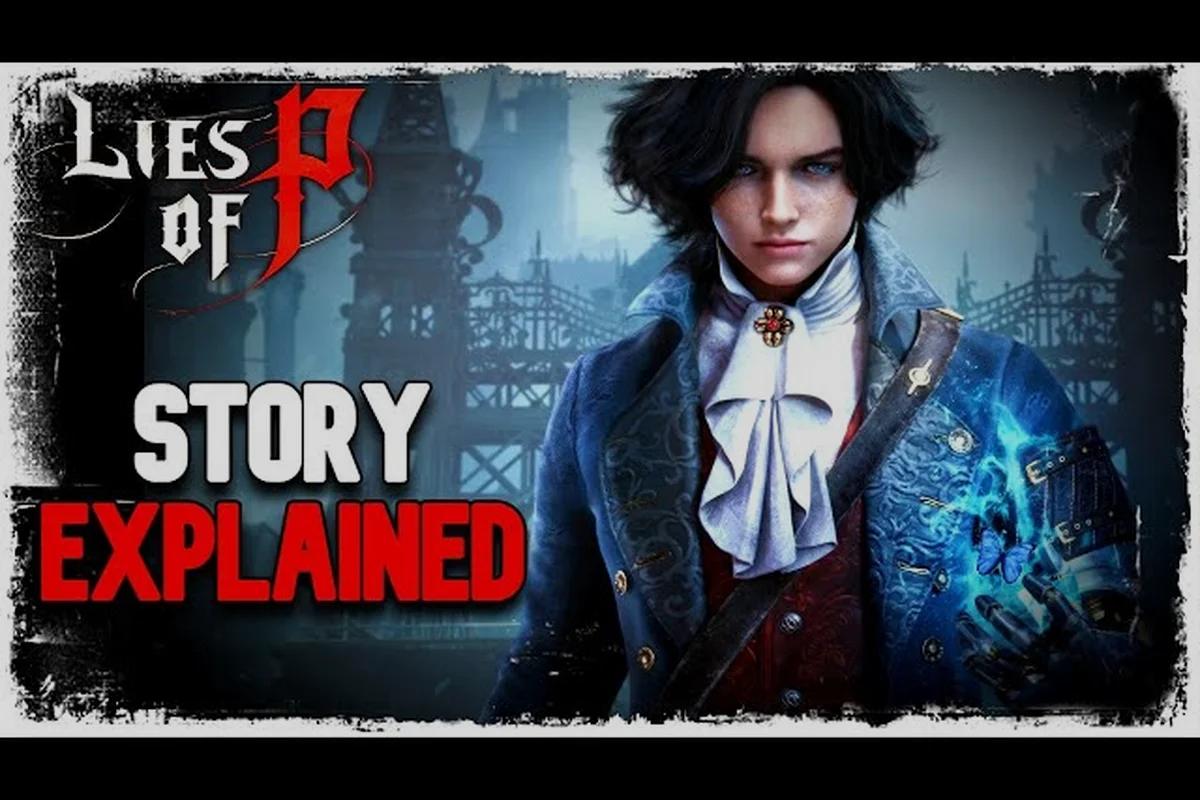
The Wonders of O world sits at the intersection of Krat-era industrial dread and L. Frank Baum's Land of Oz, and the way that hybrid setting actually works is the single most-discussed topic across every Lies of P 2 theory thread. With Round8's Neowiz trademark filings locking in the name, the question is no longer whether the sequel's world will draw on Oz, but how deep the Dorothy, Yellow Brick Road, and Emerald City threads now run through the canon. Below is a full map of the Wonders of O world, the Oz lore it leans on, the timeline the sequel has to honor, and the canon seams the studio has left open for players to read.
Setting, Scale and the Rules of Oz
The Wonders of O world is the next-generation Krat-plus-Oz setting Round8 is building on top of the original Lies of P's Belle Époque puppet nightmare. Community teases around the Wonders of O trademark and follow-up sequel-name reporting from IGN India frame it as a hybrid world where the industrial puppetry of Krat now bleeds into a stylized Land of Oz. Inside the fiction, that blend is treated as a real geography rather than a dream layer, which is why the Wonders of O timeline already has measurable anchor points rather than vague mythic openings.
The world is structured around three concentric rings, and each ring carries a distinct narrative function that the rest of the article builds on. The outer ring preserves Lies of P continuity by reusing Belle Époque Krat assets and the Krat puppetry combat loop, so returning players start inside familiar geometry before any Oz retread. The middle ring then mutates that base into Munchkinland corridors and Yellow Brick Road traversal, swapping horror pacing for fairy-tale set pieces tied to the post-credits Oz tease. The inner ring finally funnels everything into Emerald City and the Wizard's Citadel, where late-game reveals, boss gates, and ending branches resolve the hybrid Wonders of O timeline rather than restarting it.
| Ring | Setting | Narrative Function | Approx. Player Phase |
|---|---|---|---|
| Outer Ring | Twisted Krat outskirts (carried over from Lies of P) | Continuity bridge, tutorial for returning players | Prologue / Act 1 |
| Middle Ring | Munchkinland + Yellow Brick Road corridors | Tone shift from horror to dark fairy tale | Act 2 / midgame |
| Inner Ring | Emerald City + Wizard's Citadel | Reveal hub, late-game boss gates, ending branches | Act 3 / postgame |
The outer ring ensures the Wonders of O world never feels like a hard reboot, the middle ring delivers the Oz-flavored set pieces fans have been reading out of the post-credits scene, and the inner ring concentrates the cast reveals that the original Emerald City story analysis already started tracking.
How Lies of P 2 Story Bridges the Two Worlds
Lies of P 2 story design has to pull off a tricky double move: it must respect the ending of Lies of P (and the Lies of P: Overture DLC) while opening a believable portal into the Wonders of O world's Oz half. The bridge is built from three story-carrying objects that already exist in canon, and the sequel is expected to escalate each one rather than replace them.
Object 1: The Emerald Tablet
The Emerald Tablet is the alchemical master text introduced in the Lies of P: Overture prequel content, and it is widely treated by the community as the mechanical justification for trans-dimensional travel. Its alchemical language deliberately mirrors real-world Rosicrucian and Hermetic motifs, which gives the sequel a written excuse to reach into a different fairy-tale canon without breaking the Lies of P internal rules. The Overture rebalance patch notes from IGN confirm the studio is still actively tuning that content, which is consistent with a sequel that leans on the same lore hook.
Object 2: The Ruby Slippers and Their Oz Counterpart
The post-credits scene places a clear Oz artifact in Pinocchio's hand. The sequel's lore task is to define what that artifact is allowed to do inside the Lies of P 2 story without flattening the choice-driven ending that defined the first game. Because the object is presented as a literal pair of shoes, it is the cleanest visual cue the studio has for moving P between the Krat half and the Oz half of the map.
Object 3: The Paracelsus Runtime Layer
Paracelsus is the historical figure the Lies of P universe has already appropriated as a near-mythic alchemist, and the runtime layer he represents is what allows the Emerald Tablet to actually do work in the world. For the sequel, the runtime is the part of the canon that has to be flexible enough to support a setting that is technically not Krat anymore. That tension — fixed canon, flexible runtime — is what makes the Lies of P 2 lore analysis more complicated than a standard "go to a new region" sequel.
The Wonders of O Timeline From Krat to Oz
The Wonders of O timeline is not a single calendar but a stack of three overlapping chronologies, and each one is anchored to a different medium the studio has shipped or referenced. Mapping them out side by side clarifies which parts of the canon are locked and which are still player-interpreted.
| Timeline | Anchor | In-Unicode Start | Status | Primary Source |
|---|---|---|---|---|
| Krat Era | Lies of P base game | Belle Époque collapse, puppet frenzy | Locked canon | Lies of P, Lies of P: Overture |
| Overture Interlude | Lies of P: Overture | Days before Krat's fall | Locked canon | Lies of P: Overture |
| Wonders of O Era | Lies of P 2 / Wonders of O | Unknown offset after Lies of P ending | Player-theorized | Trademark, post-credits, community data |
The first two rows are studio-locked, and the third is the open one. That is why almost every "what order should I play this in" question collapses into a timeline question: a player who has not yet finished Overture is missing the single most important bridge event the sequel will reference, which is also why a quick story recap before Wonders of O is essentially mandatory for anyone returning cold.
How the Lies of P 2 Timeline Splits
Inside the Wonders of O era itself, community data points to at least two timeline threads, not one: a Krat-based continuation thread that still honors the Lies of P ending, and an Oz-bound arrival thread triggered by the post-credits artifact, with most dataminers and lore trackers expecting these strands to interleave inside a single Lies of P 2 campaign rather than branch into two separate releases.
-
The Krat Return Thread — events that still happen in the Krat geography the player already knows, but after the Lies of P ending. This thread is what carries the returning characters and the studio's promise of emotional continuity.
-
The Oz Arrival Thread — events triggered by the post-credits artifact, where Pinocchio (or his successor) physically enters the Land of Oz. This is the part of the timeline that the Land of Oz setting analysis tracks beat by beat.
Inside the Wonders of O canon as Neowiz has hinted it, the two strands will almost certainly braid inside one shared Lies of P 2 campaign, because the studio has tied the post-credits Oz artifact directly to the Krat ending's unresolved threads — meaning returning NPCs like Sophia and Romeo would carry their arcs into the Land of Oz setting rather than being sidelined in a Krat-only epilogue, which is why most dataminers treat the WONDERS OF O timeline as one single product release instead of a split DLC roadmap.
The Wonders of O Land of Oz Geography
The Wonders of O Land of Oz geography is the part of the setting that the franchise has actually been telegraphing for three years. Every Oz-set location that shows up in the sequel is one fans have already seen referenced in the base game, in Overture, or in the post-credits scene.
Region 1: The Yellow Brick Road
The Yellow Brick Road is treated as a literal path inside the world, not as a metaphor. Mechanically it functions as the connective tissue between the outer ring and the Emerald City, and the in-fiction justification for it is that the road is a piece of Paracelsus infrastructure rather than a naturally occurring landmark. That means the road can be damaged, redirected, and used as a story gate, which is more flexible than treating it as scenery.
Region 2: Munchkinland
Munchkinland is where the tone shift from Krat-industrial horror to dark fairy tale is most aggressive. The community expectation is that the first major set piece after the Krat bridge will land here, because it lets the studio change combat pacing, enemy archetypes, and even the music language without breaking the soulslike combat contract the franchise is known for.
Region 3: The Emerald City
The Emerald City is both a story and a gameplay hub. As a story location, it is where the Wizard (and the Oz analogue of the game's alchemist cabal) finally has to be confronted. As a gameplay hub, it is the most likely place for the sequel's merchant, upgrade, and respec services to live, because the city is the one Oz location that canonically hosts a court.
Region 4: The Wicked Witch's Domain
The Wicked Witch's domain is the late-game ring of the map, and based on the franchise's pattern of escalating boss difficulty with each region, this is where the hardest boss gates will sit. The community-tracked return of the Wicked Witch as a recurring antagonist figure is one of the more solid lore bets for the sequel, because her domain is the only Oz region that gives the studio room to keep her mechanically relevant across multiple fights.
The Wonders of O Canon and Its Open Seams
Wonders of O canon is the part of the world-building that Round8 has actively chosen to leave open, and identifying those seams is the difference between a casual reading of the trailer and a theory that survives a patch. The three open seams that matter most right now are:
-
The P-Organ carryover rule. The P-Organ system is one of the most-defined mechanics in the base game, and the sequel has not yet stated whether player progression carries over. Until the studio confirms a rule, that question stays in the canon-open bucket.
-
The Lies/Lie endings canonization. The first game shipped with multiple endings, and the sequel's canon is widely expected to pick one of them as the default anchor. The community-tracking conversation around this is summarized in the Lies of P lore timeline breakdown, which lays out the trade-offs between a "Rise of P" canon and a "Free from the Puppet" canon.
-
The identity of the Wizard's successor. The Wizard figure is a heavily implied presence in the post-credits scene, but the studio has not named the in-world actor who will fill that role in the sequel. The community has been bouncing between Simon Manus, Paracelsus, and a brand-new character, and each of those readings is consistent with what is currently shipped.
How the Sequel Will Read Krat After Oz
A second-order canon question that gets less airtime but actually shapes gameplay is what the Krat half of the map looks like after the player has already left for Oz. The two main theories are a "timelapse" reading, where Krat is shown as decayed and partially reclaimed, and a "snapshot" reading, where the Krat sections of the sequel are flashbacks to a fixed point in the original game's timeline. The first reading gives the studio room to do environmental storytelling about the cost of the player's choice; the second reading is cleaner but limits how much returning location design the team can ship.
What This Means for Players Tracking the World
For players who are actively tracking the Wonders of O world, the practical takeaway is that the canon is split into three read-priorities, and the order in which you consume material will change which seams you notice first. Players who played Lies of P and Overture back-to-back have a strong advantage on the object-based lore, while players who only watched the trailer and read the trademark coverage will have a more visual, less mechanical read of the same world.
| Read-priority bucket | In-world object | Tell when canon is load-bearing | Trailer red flag | Player-type that spots it first |
|---|---|---|---|---|
| Object-based lore (Paracelsus layer) | Yellow Brick Road | Actively routes the protagonist, opens a new region, or is named in a cutscene | Used as scenery, painted on a backdrop, or only visible in wide shots | Lies of P + Overture back-to-back players |
| Load-bearing canon (timeline layer) | Emerald Tablet | Referenced by an NPC, item description, or post-credits stinger without prompting | Only mentioned in passing by a background prop | Players who finished Overture's post-credits scene |
| Protagonist marker (travel layer) | Ruby Slippers equivalent | Held, worn, orquested by a named character on screen | Appears only as a shop icon, DLC trophy, or logo stinger | Trailer-and-trademark-coverage-only viewers |
As new material drops for the Wonders of O world, the most useful filter is to score each reveal against the three read-priorities before deciding whether it is a real canon beat or just trailer decoration; for example, a new location that shows the Yellow Brick Road acting like scenery should be flagged, but a new NPC carrying a Ruby Slippers equivalent should be treated as a load-bearing protagonist clue, and tracking which bucket each drop falls into is the single habit that separates clean sequel predictions from the noisy theory churn on the timeline thread.
-
The Yellow Brick Road is a Paracelsus object, not a natural landmark, and any future lore that treats it as scenery is a red flag.
-
The Emerald Tablet is the load-bearing piece of canon, and any sequel theory that does not engage with it is going to age poorly.
-
The Ruby Slippers equivalent is the cleanest "this character can travel" marker in the world, and it is the single best predictor of which protagonist model the sequel will use.
Together, those three read-priorities give any player a way to evaluate new reveals as they land without needing to chase every individual theory thread, and they line up with how the studio has been hinting at the world since the first game's post-credits scene. The Wonders of O world is not a single map; it is a layered setting, and the players who track all three layers will be the ones whose predictions survive contact with the actual release.
Frequently Asked Questions
What is the Wonders of O world in simple terms?
It is the hybrid setting Round8 is building for Lies of P 2, where the Belle Époque puppet nightmare of Krat overlaps with a stylized version of L. Frank Baum's Land of Oz. The map is structured as three concentric rings, with Krat's outskirts on the outside, the Yellow Brick Road and Munchkinland in the middle, and the Emerald City and Wizard's Citadel anchoring the inner ring.
Is Wonders of O canon connected to the original Wizard of Oz?
Indirectly, yes. The sequel uses Oz as a setting layer rather than as a direct adaptation, which is why the Yellow Brick Road is in-fiction treated as a Paracelsus object rather than a naturally occurring path. The Oz references are deliberate but filtered through Lies of P's alchemist-and-puppet canon, so players should expect dark-fairy-tale homages rather than scene-for-scene recreations.
Where does Wonders of O sit on the Lies of P 2 timeline?
The Wonders of O era is the third layer in the franchise timeline, sitting on top of the Krat era from the base game and the Overture interlude. The first two layers are studio-locked canon, while the Wonders of O era is still being assembled from the trademark, the post-credits scene, and community-tracked theory threads, so the exact offset from the Lies of P ending is still open.
Do I need to play Lies of P: Overture before Wonders of O?
Practically, yes. The Overture DLC introduces the Emerald Tablet and the Paracelsus runtime layer, which together are the mechanical and narrative bridge the sequel leans on most heavily. Skipping Overture leaves the single biggest lore seam in the sequel unexplained, and a short recap of those beats is the cheapest way to close that gap before launch.
Will the Wonders of O world keep using Krat as a location?
The community expectation is that Krat will return as a flashback and postgame region rather than as the main playable area, because the studio has framed the sequel's main campaign as a single coherent narrative. The open question is whether the Krat sections will use a timelapse reading, with Krat decayed and partially reclaimed, or a snapshot reading set at a fixed point in the original game's timeline.