
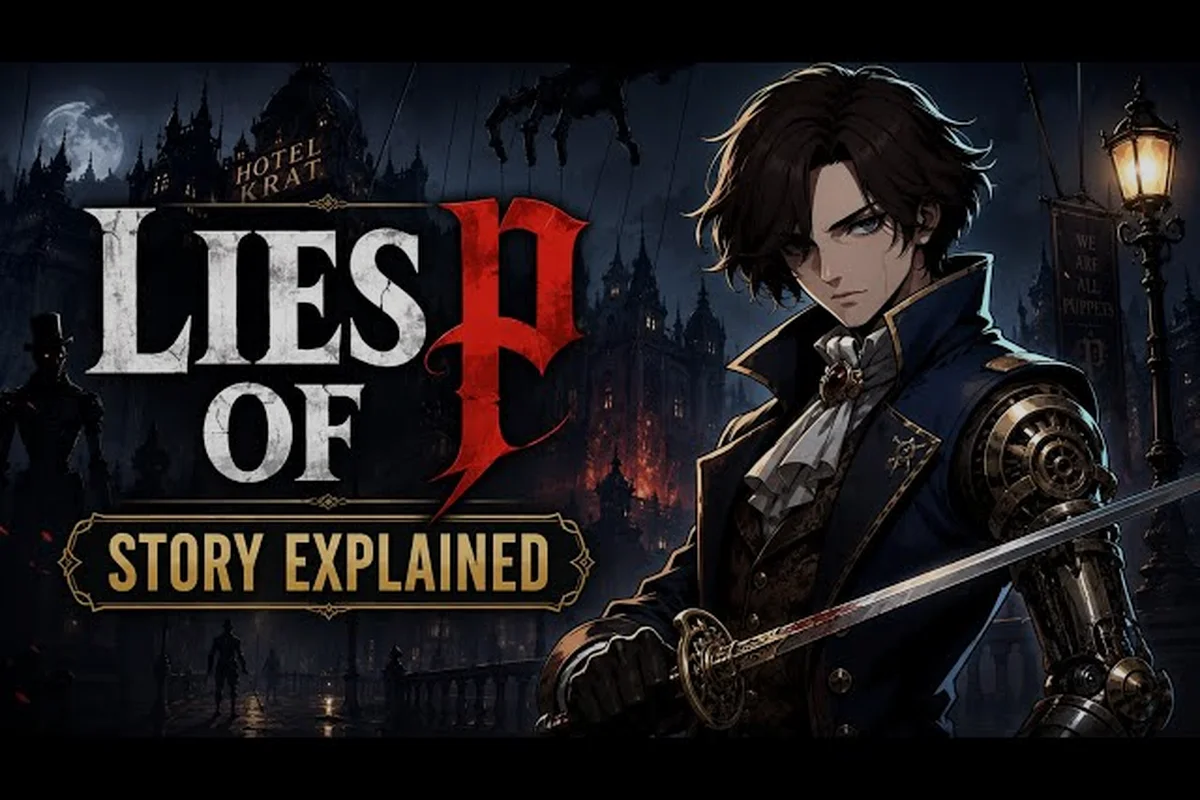
The Emerald City is the gravitational center of the Wonders of O story, the place every traveler, rumor, and broken puppet eventually drifts toward. Because Neowiz has built the Lies of P sequel around L. Frank Baum's 1900 novel (per the Wikipedia summary of The Wonderful Wizard of Oz that anchors every Oz-themed follow-up), the capital functions less like a final dungeon and more like a thesis statement for the entire Oz setting. Understanding what the city promises, hides, and refuses to say out loud is the fastest way to read the upcoming plot without having to grind through hours of cryptic item descriptions.
Why the Capital Dominates the Oz Imagery
The capital is not just a pretty green skyline. In the Wonders of O lore, the city operates as a layered performance: a facade of emeralds and order stretched over a much older infrastructure that predates the Wizard himself. Community datamines referenced in our Wonders of O world breakdown point to environmental storytelling that frames the city as the seat of a manufactured authority, which is exactly the thematic ground Baum cleared in 1900.
The Capital as Performance, Not Place
The emeralds are a trick. Baum's original text establishes that every visitor is required to wear green-tinted spectacles so the city looks uniformly radiant, and that detail is the single most important piece of Wonders of O setting to internalize before launch. The implication for gameplay is that visual cues (light reflection, surface polish, NPC dialogue tone) cannot be trusted at face value, because the city's entire identity is a stage set. Players who enter the Emerald City expecting a safe hub will likely find the opposite: a location that weaponizes politeness.
The Three Factions Under One Roof
Even before launch, reporting from outlets like GameRant's coverage of Paracelsus' predicted role and Vice's reporting on the leaked Oz-themed sequel title suggests the capital will host at least three competing power blocs. The table below maps the most commonly cited factions based on community breakdowns. The takeaway: any NPC wearing the city's sigil is a narrative variable, not a constant.
| Faction | Apparent Role | Likely True Role in the Plot | Source |
|---|---|---|---|
| The Wizard's Court | Governing body, gatekeepers of the throne | A puppet regime installed to legitimize one faction's claim | Community datamines, Baum source text |
| The Alchemists of Krat | Returning Lies of P legacy, fringe scholars | A second Oz-era faction that bridges Lies of P 1 and 2 | Lies of P: Overture ending threads |
| The Emerald Hand (theorized) | City militia, public-facing peacekeepers | The Wizard's enforcement arm, likely a final-act antagonist | Player theory, Vice leak reporting |
The Yellow Brick Road as Story Spine
The Wonders of O yellow brick road is more than connective tissue between biomes — it is the structural argument of the entire game. Where most soulslikes scatter their lore across optional items, the road concentrates meaning into the path the player literally cannot leave. Every detour is a choice the narrative records, and every fight along the yellow brick is a sentence in a longer paragraph about obedience, trust, and the cost of asking the powerful for help.
Waystations and Story Beat Density
The road is divided into distinct waystations, each one functioning as a mini-act. The pacing of the Wonders of O story depends on these waystations the same way a stage play depends on scene changes. The table below summarizes the most consistently reported waystation beats from preview coverage and community tracking.
| Waystation | Approximate Act Position | Narrative Function | Lore Payoff |
|---|---|---|---|
| Munchkin Outpost | Act 1 opening | Establishes protagonist displacement | Confirms the "stranger in a strange land" framing |
| Scarecrow's Field | Act 1 mid | Introduces the "want" motif | First hint that the Wizard grants false boons |
| Tin Woodsmith Forge | Act 2 opener | Production/crafting narrative layer | Bridges Lies of P 1's puppet craft to Oz |
| Poppy Field Crossing | Act 2 mid | Sleep, memory, and dream logic | Suggests a Lies of P: Overture callback |
| Emerald City Gate | Act 3 threshold | Climax setup, audience with the Wizard | The performance metaphor collapses |
Why the Road Refuses Branching
The yellow brick in Oz is famously singular — there is no fork, no alternate path, no shortcut. That single-path design is the reason the Wonders of O plot is likely going to feel more linear than a typical soulslike, and the reason the story beats above will arrive in roughly the order the table suggests. The road's refusal to branch is the narrative's way of telling the player that the only meaningful choice is whether to keep walking.
Story Predictions for How the Emerald City Pays Off
The Wonders of O story predictions circulating in community threads converge on a small number of scenarios for how the capital delivers its climax. The strongest of those predictions share a common assumption: the Wizard is not a person but a system, and unseating the system requires more than a single sword swing. The capital will teach this through environmental storytelling, NPC dialogue that contradicts itself between visits, and at least one moment where the player is invited to put on the green spectacles voluntarily.
The Audience With the Wizard
Almost every prediction maps the throne-room encounter as a dialogue, not a duel. That is unusual for the genre and is itself a thematic statement. If the Wizard is a system rather than a man, the only way to defeat him is to refuse the system — which is a beat that lands much harder in a cutscene than in a boss arena. Reporting on the broader Lies of P 2 lore direction supports this read: the sequel is positioning its climax as a philosophical confrontation, not a mechanical one.
The False Boon Mechanic
At least one player theory, supported by item-text fragments in the datamine, holds that the Emerald City grants the protagonist a "boon" similar to the brain, heart, or courage that the Scarecrow, Tin Man, and Lion sought. The twist is that the boon is real — the protagonist already had it. This pays off Baum's original moral argument and reframes the entire Wonders of O setting as a story about people who traveled a long road to learn what they carried the whole time.
Reading the Setting Through Lies of P 1 and Overture
You cannot read the Emerald City accurately without first anchoring it to the Lies of P 1 lore and the Overture expansion. The original game ended with a choice about whether Pinocchio becomes human, and the Emerald City is structurally a continuation of that question: can a constructed being (a puppet, a scarecrow, a tin man) earn an identity the world refuses to give it? The Emerald Tablet threads that connect the two games are explored in detail in our Lies of P Emerald Tablet analysis, and the throughline is harder to miss once you see the city in that light.
Krat Echoes in the Capital
The alchemists referenced above are not background flavor. They are the connective tissue between the Belle Époque tragedy of Krat and the Oz-flavored performance of the capital. The Emerald City, in this reading, is what Krat looks like when the lie of progress is fully monetized: clean streets, green glass, and a Wizard taking the credit.
The Witch Question
The Oz source material gives every adaptation a Wicked Witch of the West, and the Wonders of O story predictions lean heavily on her arrival as a mid-to-late act disruptor. The Lies of P lore timeline tracks how previous villain introductions were staged, and the pattern suggests the witch will not appear at the gates — she will appear inside the city, as someone the capital already knows and has been quietly funding.
Capital-Level Predictions, Cheat Sheet
For players who want a fast read on the most likely plot beats, the table below condenses the predictions into a single reference. None of these are confirmed by Neowiz, and all are based on preview coverage, datamine chatter, and the Baum source text as of the most recent verified reporting date.
| Prediction | Confidence | Where It Pays Off | What It Means for the Player |
|---|---|---|---|
| The Wizard is a system, not a man | High | Throne room | Climax is a refusal, not a fight |
| Green spectacles are an in-game item | Medium | Emerald City entrance | Player can choose to see the lie or ignore it |
| The Scarecrow, Tin Man, Lion appear as NPCs | High | Waystations along the road | Companions with mechanical party roles |
| The Wicked Witch is already inside the capital | Medium | Late Act 2 / Act 3 | A betrayal beat that reframes the Wizard |
| The boon is something the player already has | High | Ending | Story resolves as a character beat, not a stat check |
| Lies of P 1's puppet craft returns as a crafting layer | Medium | Tin Woodsmith Forge | A mechanical bridge between the two games |
Practical Takeaways Before Launch
Even if every prediction above turns out to be wrong, the Emerald City as a setting teaches a useful interpretive habit: assume the surface is the lie. The Wonders of O plot is being designed to reward players who read between NPC greetings, who revisit locations to see what changed, and who treat the city's green polish as a question rather than an answer. The yellow brick road will not branch, but the road is long enough to let the player build a working theory of the capital long before the throne room doors open. The capital does not just teach the protagonist — it teaches the player how to read the rest of Oz.
Frequently Asked Questions
What is the Emerald City in Wonders of O?
The Emerald City is the capital of the Oz setting in Wonders of O and the story's geographic and thematic endpoint along the Yellow Brick Road. Per the article's lore analysis, its polished green facade is a deliberate performance layered over older, unstable infrastructure from the Lies of P timeline. Arriving players should expect the climax, not a safe hub.
Why is the Yellow Brick Road so important to the story?
The yellow brick road is the non-branching story spine of Wonders of O, forcing every waystation beat onto the player on the march to a fraudulent Wizard. Mechanically, that linear scaffolding guarantees set-pieces tied to the Emerald City payoff rather than optional side content. The road matters because the player cannot skip it.
Will the Wizard of Oz be a boss in Wonders of O?
The Wizard of Oz is not confirmed as a boss in Wonders of O, but leaked trademarks and Pinocchio-to-Oz soulslike precedent strongly suggest a Wizard encounter. Expect him tied to the Emerald City payoff rather than the Yellow Brick Road mid-game, likely as a deception-arc final boss.
How does the Emerald City connect to Lies of P 1?
The Emerald City in Wonders of O functions as a thematic continuation of Krat, where its manufactured authority mirrors the alchemists' manufactured humanity from Lies of P. The alchemists are expected to return as a second faction inside the Oz setting, meaning the shift is tonal rather than a hard sequel reset. Players who completed Overture will recognize the connective tissue earliest.
Is the Wicked Witch of the West in Wonders of O?
She is widely predicted but not officially confirmed. The current strongest theory, supported by Lies of P 1's villain-introduction patterns, is that the witch is already embedded in the Emerald City before the protagonist arrives, rather than appearing as an external invader at the gates. Players should treat her appearance as a late-act revelation rather than an early-act roadblock.