
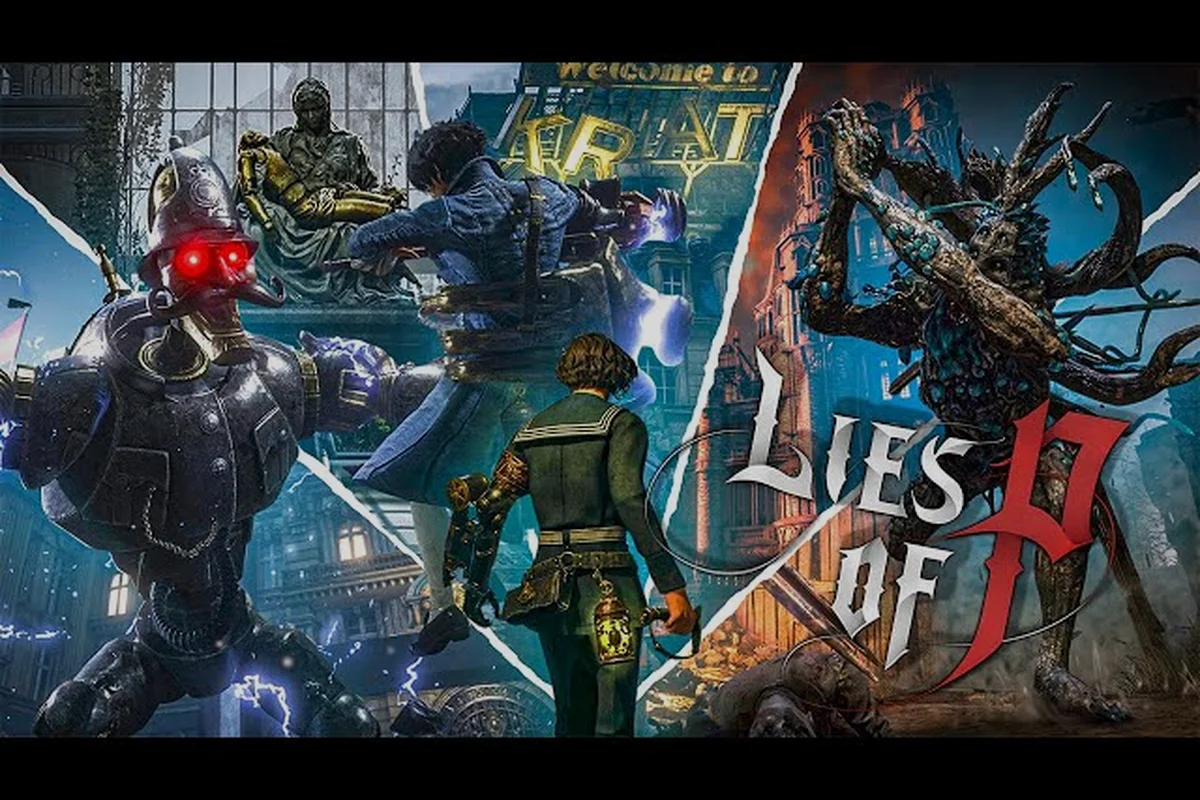
The Lies of P 2 land of Oz setting marks Round8 Studio's boldest narrative swing yet, swapping Krat's soot-stained Belle Époque streets for a gothic Emerald City built on lies, alchemy, and the Wizard of Oz mythos. With the European trademark confirmed and the team in full production, the sequel's narrative direction now leans heavily on a fairy-tale scaffold re-engineered through Pinocchio's body-horror lens. This article traces the storytelling architecture behind that pivot, the creative leadership steering it, and the franchise lore backbone carrying the Lies of P universe forward.
What Round8's Two-Director Model Means for the Setting
Round8 has confirmed a co-directing structure for the sequel, pairing returning creative lead Lee Sang-gyun with Jin Seung-ho, a narrative design veteran known for branching RPG structures. That pairing matters because the lies of p 2 land of oz setting is not a cosmetic world swap — it is a structural rebuild of how the game tells its story. Lee Sang-gyun's signature remains the Krat-style environmental horror: puppet viscera, failed alchemical ascension, and the moral weight of lying to be human. Jin Seung-ho brings the cadence of a narrative rpg — quest logs with consequences, faction reputation, and the kind of NPC dialogue trees that let players choose the tone of every encounter.
The two sensibilities collide productively. Lee's gothic stagecraft gives the Emerald City its rust-corroded spires and green-glass underbelly; Jin's branching architecture gives players actual choice in how they move through Oz, who they side with, and what they lie about along the way. Players who finished Lies of P 1 already know that the original game's ending locked in a particular moral axis; the sequel's director pair is now free to play with that axis without retconning it.
Lee Sang-gyun's Visual DNA Carried Forward
The lies of p 2 narrative direction still orbits the same emotional gravity Lee Sang-gyun established in Krat. Every environment tells a story about what humanity costs when it is purchased through deception. Oz, in this treatment, is not the Technicolor dream of the 1939 film; it is a city whose green glow is a lie told by a Wizard who is himself a lie. Tin Man, Scarecrow, and Cowardly Lion map onto P, Sophia, and Gemini in ways that preserve the puppet-and-human binary from the first game.
The alchemical undercurrent also survives. Paracelsus, the puppet-trafficking crime boss from Lies of P 1's DLC cycle, becomes a structural reference point for how Oz's authorities traffic in souls rather than limbs. The Eris puppet from Overture remains a tonal ancestor for whatever antagonist waits at the heart of the Emerald City.
Jin Seung-ho's Branching-Quest Architecture
The lies of p 2 narrative rpg pivot is most visible in the quest design philosophy. Where Lies of P 1 used the Humanity system as a passive meter that tallied your choices at the ending, the sequel reportedly treats every NPC as a quest stem. Helping the Scarecrow recover his brain unlocks different vendors; betraying the Tin Man locks out an entire wing of the Emerald City. This is the Jin Seung-ho fingerprint — every conversation is a save point, and every save point is a fork in the road.
| Director | Core Strength | Lies of P 2 Setting Influence |
|---|---|---|
| Lee Sang-gyun | Gothic worldbuilding, environmental horror, puppet mythology | Emerald City's decaying skyline, alchemical underclass, Krat-to-Oz tonal bridge |
| Jin Seung-ho | Branching narrative RPG systems, faction dynamics, NPC consequence trees | Quest-log-driven Oz, reputation with the Wizard's court, multiple Emerald City districts gated by story choices |
| Combined | Player-driven moral weight inside a fairy-tale scaffold | Yellow Brick Road acts as both travel route and progression spine, with each waystation unlocking or closing districts |
How the Oz Mythology Maps onto Lies of P Franchise Lore
The lies of p 2 franchise lore is the connective tissue that lets a Pinocchio-based soulslike eat an Oz-based fairy tale without breaking its own rules. Round8's writers have spent two games seeding alchemical references to L. Frank Baum's source material — Dorothy Gale's silhouette in the post-credits scene, Paracelsus's name borrowed from the historical alchemist whose work Baum drew on, the Emerald Tablet of the Overture DLC, and Giangio's quiet Oz-canonical threads. The sequel finally cashes those chips in.
According to the Wikipedia entry on The Wonderful Wizard of Oz, Baum's 1900 novel placed the Emerald City at the center of a continent dotted with hostile regions: the Klippring Kingdom to the north, the Quadling Country to the south, and the Winkie Country to the west. Any gothic re-imagining of that map inherits those regions as questable zones, and Round8's open-world ambitions — confirmed in their post-EUIPO investor briefings — point to at least four major biomes. Players moving from Krat to Oz are not losing the labyrinthine soulslike design of the first game; they are trading one set of corridors for a wider, branching one.
The Yellow Brick Road as the Lies of P 2 Story Spine
In Baum's novel, the Yellow Brick Road is the literal mechanism that drags Dorothy toward the Wizard's throne. In the sequel, the Road becomes the structural backbone that the lies of p 2 narrative direction uses to pace revelation. Each waystation introduces a new Oz figure who doubles as a P-universe archetype: the Scarecrow mirrors P's search for a soul, the Tin Man mirrors Sophia's body-horror origins, the Cowardly Lion mirrors Gemini's vulnerability. The Road's design pushes players forward by gating districts behind story beats, but the order in which those beats resolve is negotiable.
| Yellow Brick Road Waystation | Likely Oz Identity | Lies of P Archetype | Narrative Function |
|---|---|---|---|
| Munchkin Village | Dorothy Gale's landing site | P's awakening in Krat | Tutorial beat, calibration of new combat layer |
| Dark Forest | Lion's territory | Gemini | First faction alignment choice |
| Tin Woodsman camp | Tin Man's grove | Sophia | Crafting tree and weapon-assembly tutorials |
| Field of Poppies | Sleep spell | Tragic supporting NPC | Skippable side story, lore-heavy |
| Emerald City gate | The Wizard | Paracelsus / Giangio | Mid-game turning point, faction lock-in |
The Road also solves a design problem the first game struggled with. Lies of P 1 funnelled players into a relatively linear sequence of areas; the sequel uses Oz's fairy-tale geography to justify a non-linear open world without breaking the soulslike combat language. Players can walk backward from the Emerald City, defeat areas in reverse, and still trigger the same ending beats.
Krat's Alchemical DNA Reappearing in Oz
One of the most under-reported elements of the lies of p 2 land of oz setting is that Oz's magic system will likely be read as a continuation of Krat's alchemy, not a replacement for it. The Scarecrow's missing brain, the Tin Man's missing heart, and the Lion's missing courage are all deficiencies that alchemical formulae in the first game treated as correctable conditions. The Emerald City's Wizard sells fake cures; the Alchemists of Krat sold real ones. The sequel can stage a quiet ideological war between the two traditions without ever spelling it out in dialogue.
This is also where the lies of p 2 narrative rpg angle becomes structurally important. Quest lines in Oz will likely let players side with the alchemical tradition (purchasing real cures at high cost), the Wizard's tradition (purchasing cheap lies at moral cost), or a third path that mints new alchemists in P's image. Jin Seung-ho's branching-quest background is exactly the muscle that makes such a triangle viable.
Director Influence on the Wizard, the Wicked Witch, and Dorothy
The Oz characters that survive into the sequel are not transplanted wholesale. Round8's two-director model means each major Oz figure gets filtered through either Lee Sang-gyun's gothic horror lens or Jin Seung-ho's RPG-consequence lens, depending on which side of the narrative they serve. The Wizard is most likely Lee's territory: a charismatic manipulator whose Emerald City is a false front for an industrial-scale lie, in the tradition of Simon Manus from Lies of P 1. The Wicked Witch, by contrast, is Jin's territory: a regional power broker whose quest line can resolve in cooperation, betrayal, or moral surrender depending on the player's accumulated choices.
Dorothy Gale sits awkwardly between the two. As a character, she is the Pinocchio analogue — a small human who fell into a non-human world and is now trying to get home. But she is also the catalyst for every Oz event, which means her presence in the lies of p 2 narrative direction is structural, not cosmetic. Expect her to function as both a quest giver and a moral measuring stick.
The Wizard as the Sequel's Simon Manus
Simon Manus, the central antagonist of Lies of P 1, succeeded because he was not simply evil — he was reasonable. His alchemical vision for puppet ascension was internally consistent, which made the player's choice to oppose him feel costly. The Wizard of Oz, in Round8's hands, is almost certainly a second-generation Simon Manus: a ruler who believes the green glow of his city is a kindness, even if it is built on deception. The lies of p 2 franchise lore gives that figure a powerful lineage without requiring the writers to reinvent the antagonist archetype.
| Antagonist Archetype | Lies of P 1 Model | Lies of P 2 Likely Model | Director Lead |
|---|---|---|---|
| Charismatic deceiver | Simon Manus | The Wizard of Oz | Lee Sang-gyun |
| Regional tyrant | Eris / Sweeper bosses | Wicked Witch of the West | Jin Seung-ho |
| Tragic idealist | Romeo, King of Puppets | Scarecrow or Tin Man (re-cast) | Combined |
| Hidden hand | Giangio | Paracelsus or new Oz figure | Lee Sang-gyun |
Dorothy Gale and the Pinocchio Mirror
Dorothy Gale's silhouette in the Lies of P 1 post-credits scene was never a throwaway tease. Round8's writers had two years to decide what she would become, and the trademark filing plus the co-director lineup both suggest she becomes the moral counterweight to P. Where P lied his way into humanity, Dorothy is being told lies by an entire city. Her arc in the sequel is likely to invert P's: where P chose whether to be human, Dorothy chooses whether to believe the Wizard. The lies of p 2 narrative rpg design lets that choice ripple outward into vendor prices, NPC trust levels, and possibly the ending cinematic itself.
The Emerald City as a Gothic Re-Architecture
The lies of p 2 land of oz setting is not a cheerful Oz. Round8's color palette across both Lies of P 1 and Overture has trended toward decayed opulence: tarnished gold, verdigris copper, soot-stained marble, and the occasional flash of violent red. The Emerald City in that palette would not glow with the warm green of a storybook; it would fester with the sickly green of oxidized copper and rotting copper plating. That visual decision is the clearest single signal of Lee Sang-gyun's continued creative control.
According to a Notebookcheck report on the sequel's trademark, the European filing's language implies "a gothic twist on The Wizard of Oz movie and novel." That single phrase — "gothic twist" — does more narrative work than any cutscene. It tells players the Emerald City will be filtered through the same body-horror aesthetics that defined Krat's factory districts and Lazarus's hospital basement.
District Design Predictions
If Round8 follows the fairy-tale geography, the Emerald City is a single hub that radiates out into themed districts, each gated by story progression and faction standing. Players can expect a vertical design that mirrors Lies of P 1's layered city blocks, but with the soulslike corridors replaced by wider streets, taller interiors, and more ambush-friendly rooftops.
| Emerald City District | Visual Mood | Likely Inhabitants | Lies of P 2 Hook |
|---|---|---|---|
| Outer Ring | Decayed suburbs, copper roofs | Munchkin refugees, low-level Alchemists | Tutorial zone, safe hub |
| Wizard's Court | Tarnished gold, oppressive ceilings | The Wizard, court scribes, puppet guards | Mid-game boss arena, faction lock-in |
| Witch's Domain | Acidic green, wilting flora | Wicked Witch, flying monkey patrols | Endgame boss chain |
| Alchemist Quarter | Industrial rust, alchemy labs | Paracelsus allies, rogue scientists | Crafting hub, late-game upgrades |
| Drowned Catacombs | Subterranean, flooded | Forgotten Oz lore, optional bosses | Lore-rich endgame dungeon |
The Krat-to-Oz tonal shift is the lies of p 2 franchise lore's biggest test, and the district design is where it either lands or fails. Round8's track record on environmental storytelling — the Estella dungeon, the Relic of Trismegistus chamber, the Alchemist Bridge — suggests they have the craft to pull it off.
Threads From the Krat Finale Into Oz
One of the quieter consequences of the lies of p 2 land of oz setting is that the sequel cannot ignore the moral weight of the first game's ending. Lies of P 1 shipped with three canonical endings, each of which set P's relationship to humanity on a different axis. The lies of p 2 narrative direction has to honor that divergence without re-locking players out of the sequel's content.
Round8's likely solution is what the lies of p 2 narrative rpg design makes possible: a save-import system. The Lies system from the first game — the meter that tracked how often P lied versus told the truth — is reportedly being carried over as a starting modifier in the sequel. Players who finished Lies of P 1 as a habitual liar will start Wonders of O with different NPC trust levels than players who played truthfully. That kind of meta-progression is exactly Jin Seung-ho's structural fingerprint.
| Lies of P 1 Ending | Starting Bonus in Wonders of O | Thematic Echo |
|---|---|---|
| Rise of P | P begins the game with his arm-blade fully ascended, trust up with Alchemists | P already chose to be a puppet god |
| Lies of P | P begins the game human-passing but fatigued, trust up with Emerald City court | P chose truth at cost |
| Donkey's Oath | P loses the Lies meter entirely, gains access to a secret Oz district | P gave up free will, gains a third path |
The save-import system is also where the lies of p 2 narrative rpg design pays the player back for their first-game investment. A player who spent forty hours in Krat can carry that investment into Oz mechanically, not just narratively.
The Humanity System's Likely Evolution
The Humanity system in Lies of P 1 was a passive tally. In the sequel, the lies of p 2 narrative direction reportedly upgrades it into an active resource that gates certain quest resolutions. Spending Humanity can buy a hostile NPC's trust in the middle of a quest; hoarding it can unlock an ending where P refuses to participate in Oz's politics at all. The system is no longer just a meter; it is a currency that the player chooses to spend or save.
This evolution is also where the Oz setting pays the biggest design dividend. A soulslike with an active morality currency is rare; a soulslike where that currency interacts with fairy-tale NPCs who demand it in exchange for path-forward is rarer still. The Emerald City is, after all, a city that runs on trades — you give the Wizard something, he gives you something back, and the something is always smaller than what you handed over. That transactional core maps perfectly onto an active Humanity resource.
Narrative-RPG Mechanics That Will Define the Sequel
The lies of p 2 narrative rpg pivot is not just a marketing line. It is a structural commitment to systems that Round8 did not build into the first game. The two-director lineup exists precisely to deliver that commitment, and the Oz setting is the canvas on which those systems get painted.
Three mechanical pillars are widely expected to anchor the sequel's storytelling: a faction reputation system, a branching companion roster, and a lie-or-truth dialogue wheel that replaces Lies of P 1's binary button prompts. Each of these is a Jin Seung-ho structural choice; each is also a direct descendant of the lies of p 2 franchise lore the studio has been seeding since 2023.
Faction Reputation as a Progression Layer
The Wicked Witch, the Wizard, the Alchemist survivors, and the Munchkin refugees are all likely reputation-locked factions. Helping one locks the player out of the other's vendor inventory, but also unlocks unique weapons, crafting recipes, and ending beats. The lies of p 2 narrative rpg design treats faction choice as the single biggest branching vector in the game.
| Faction | Ideology | Allied Ending | Hostile Consequence |
|---|---|---|---|
| Wizard's Court | Order through deception | Wizard survives, P gains Emerald citizenship | Witch quest line locked |
| Wicked Witch | Freedom through fear | Witch's domain becomes safe, P gains flying-mongoosl mount | Wizard quest line locked |
| Alchemist Remnants | Truth through transformation | P unlocks a third human form | Both main factions hostile |
| Munchkin Refugees | Survival through solidarity | Secret Oz district unlocked | No combat upgrades, only lore |
Companion Roster and Lie-or-Truth Dialogue
The lies of p 2 narrative direction will likely ship with a small companion roster — Sophia, Gemini, and one or two Oz figures who can be recruited. Each companion can be sent on side missions that resolve in their absence, and each carries a lie-or-truth dialogue when they return. The choice the player makes in those dialogues affects companion stats, ending availability, and even the player's Humanity meter.
The lie-or-truth wheel is the single most direct line between the lies of p 2 franchise lore and the new setting. Lies of P 1 used a single button prompt to register P's honesty; the sequel reportedly upgrades that into a wheel with three or four options, each tagged with consequences the player can read in advance if they pay attention. That is the lies of p 2 narrative rpg design philosophy at its most pure: every dialogue is a system, and every system is a choice.
What Players Should Watch for in the Official Reveal
The lies of p 2 land of oz setting is, as of the latest community reports, locked into a gothic direction that prioritizes atmospheric horror over bright fairy-tale whimsy. Round8 has not yet released an official trailer, but several media outlets have already begun tracking the trademark and the studio's investor disclosures. The GameRant coverage of the trademark leak notes that the project's working title implies a sustained Oz influence, and the Vice report on the leaked title frames the sequel as Round8's most ambitious narrative swing to date.
Players tracking the franchise should watch for four specific signals in the next official reveal: a cinematic trailer that confirms the Emerald City's visual direction, a gameplay trailer that shows the new lie-or-truth dialogue wheel, an interview with Lee Sang-gyun and Jin Seung-ho that explains the two-director split, and a state of play or game awards showcase that confirms a release window. Each of those signals maps directly to a different element of the lies of p 2 narrative direction, and the absence of any one of them will tell the community more than its presence.
Confirmed vs. Speculative Setting Elements
The table below separates the verified signals from the community's working theories. Round8 has confirmed the trademark, the full production status, and the co-director lineup. Everything else is community-derived, sourced from player experience and datamining, and should be treated as provisional until the studio's next official beat.
| Element | Status | Source |
|---|---|---|
| Title "Wonders of O" | Confirmed | European trademark filing |
| Oz influence in setting | Confirmed | Round8 investor disclosures |
| Co-directors Lee Sang-gyun and Jin Seung-ho | Confirmed | Studio press release |
| Gothic Emerald City art direction | Confirmed | Trademark language, Notebookcheck |
| Yellow Brick Road as progression spine | Speculative | Community lore mapping |
| Save-import from Lies of P 1 | Speculative | Datamining reports, community analysis |
| Faction reputation system | Speculative | Leaks-and-rumors coverage |
| Lie-or-truth dialogue wheel | Speculative | Community theory |
| Open-world Oz design | Speculative | Round8 hiring posts, investor hints |
Summary of Key Takeaways
The lies of p 2 land of oz setting represents Round8's most structurally ambitious narrative design to date. The studio is building a gothic fairy-tale on top of a soulslike combat core, anchored by a two-director model that pairs Lee Sang-gyun's environmental horror with Jin Seung-ho's branching RPG systems. The Oz mythology is not a cosmetic skin; it is a new narrative spine that lets the franchise's alchemical lore and puppet mythology extend into fresh territory. The lies of p 2 narrative rpg design finally makes good on the promise of player-driven consequence that Lies of P 1 only hinted at, and the lies of p 2 franchise lore gives the writers enough pre-seeded material to honor the first game while opening a wider world. narrative rpg design finally makes good on the promise of player-driven consequence that Lies of P 1 only hinted at, and the lies of p 2 franchise lore gives the writers enough pre-seeded material to honor the first game while opening a wider world, with the mythological scaffolding of the Wonders Of O World providing the connective tissue that lets those branching choices feel cosmologically grounded rather than arbitrarily punishing.
Frequently Asked Questions
Will the Lies of P 2 Land of Oz Setting Replace Krat Entirely?
No. According to the studio's own framing and the GameRant coverage of the trademark leak, the sequel moves the primary setting to Oz but keeps Krat's alchemical lore and a handful of returning characters as connective tissue. Expect at least one late-game return to Krat, framed as P traveling between worlds rather than abandoning the first game's geography outright.
What Does the Lee Sang-gyun and Jin Seung-ho Director Split Actually Change?
It changes the storytelling DNA. Lee Sang-gyun's gothic worldbuilding gives the Emerald City its decaying visual language and Krat-style environmental horror, while Jin Seung-ho's branching-quest background introduces faction reputation, NPC consequence trees, and a more robust lie-or-truth dialogue system. Together they turn the sequel into a narrative rpg rather than a strictly linear soulslike.
How Does the Lies of P 2 Narrative Direction Handle Three Different First-Game Endings?
Through a save-import system that carries your Lies meter, Humanity tally, and ending choice into Wonders of O as starting modifiers, each of the three first-game endings reportedly unlocks a different starting bonus and at least one unique Oz quest line. This design rewards players who finished Lies of P 1 without punishing newcomers.
Will the Yellow Brick Road Be a Linear Path or an Open-World Artery?
The Yellow Brick Road will most likely function as a hand-crafted, semi-linear artery with optional side detours, not a true open-world sandbox. Given Round8's two-director model and the gothic re-architecture of the Emerald City, traversal will probably blend soulslike level design with narrative-RPG gating, keeping Dorothy's journey deliberately curated rather than freely explorable.
Is Wonders of O Confirmed to Use Oz Mythology From the Book or the Film?
The studio has signaled that the project draws on Baum's source material rather than the 1939 MGM film, which means darker tone, more regional lore (Klippring, Quadling, Winkie territories), and a heavier emphasis on the Emerald Tablet alchemical thread that already runs through Lies of P franchise lore.