
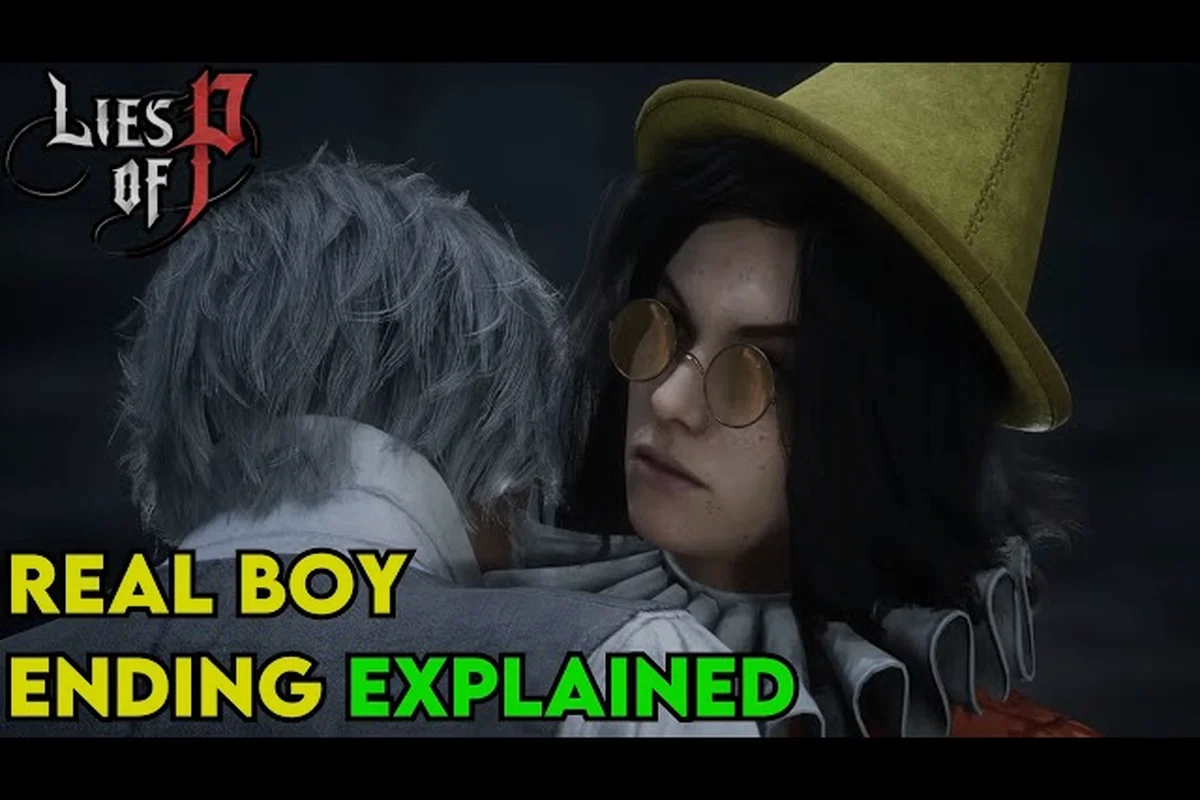
The lies of p dorothy ending explained breakdown starts where the credits roll: a single silhouette on a yellow brick road, a cackling voice over a dead frequency, and a name that changes everything. If you finished Lies of P and walked away from the post-credits scene convinced the Soulslike story was quietly stitching itself to a gothic Oz, you read it right. Neowiz's sequel framing is now public, and the Wizard of Oz DNA inside Lies of P is no longer subtext — it is the spine of the next chapter. Below is a scene-by-scene pass through the Dorothy ending, the Paracelsus clues woven through the runtime, the Giangio reveal, and every Oz easter egg you can verify in the base game. s of P is no longer subtext — it is the spine of the next chapter, and the Paracelsus alchemical thread that runs beneath it all traces back to the cryptic page work documented in our Lies Of P Emerald Tablet breakdown, which decodes how the very symbol guiding Giangio was seeded into the runtime long before the credits rolled.
What Happens in the Dorothy Post-Credits Scene
The post-credits stinger is short, but it carries the weight of an entire sequel pitch. After the final Necronomicon-style lullaby plays and the standard end-roll fades, the camera pushes through a curtain of petrified foliage to reveal a single human figure sitting on a throne of broken puppet parts. Her hair is black, her dress is blue-and-white gingham, and the only light source is a lantern shaped like a pumpkin. She lifts her head. She says a name — "Pinocchio" — and then the screen cuts to the gilded title treatment of the leaked sequel: a single, red, calligraphic "O."
For players tracking the lies of p post credits scene explained tier, the critical beats are these: Dorothy is alive, she is not a puppet, and she knows Pinocchio's name. That single fact recontextualizes every earlier reference to the Wizard of Oz because Pinocchio never met Dorothy in the base game.
Scene-by-Scene Beat Sheet
The stinger compresses roughly 90 seconds of film grammar into three discrete moments, and each moment maps to a different question players have been asking since launch. Here is the beat sheet that the community has been using to catalog the Dorothy ending.
| Beat | Visual | Dialogue / Sound | Implication |
|---|---|---|---|
| Cold open | Empty stage, falling ash, a single yellow brick | Distant wind, no music | Confirms the Oz setting is real, not a dream |
| Reveal | Gingham-dressed girl on a puppet throne | "Pinocchio" spoken in a childlike tone | Dorothy is awake and aware of the protagonist |
| Title card | Cracked mirror reflecting a red letter | The letter "O" burns into the screen | Direct sequel framing: the "O" ending series is intentional |
| Coda | Black cat silhouette on a fence | Faint cackle | The "Wicked Witch" archetype has been introduced off-screen |
The most important takeaway from this beat sheet is the order of operations. The Oz world is established first, the Dorothy character second, the sequel branding third, and the antagonist archetype fourth. Neowiz is essentially giving the audience a four-act promise in under two minutes, and that structure matches the original 1900 novel, where Dorothy reaches Oz before meeting the Witch, the Wizard, and her traveling companions in that exact sequence (see The Wonderful Wizard of Oz on Wikipedia for the source material reference).
Why This Scene Rewrites the Base Game
The lies of p secret ending explained community has long debated whether the "Rise of P" path and the "Free from the Puppet String" path are mutually exclusive. The Dorothy ending argues that they are not. Pinocchio, in this reading, was never the protagonist of his own story — he was the scout, dispatched into Krat to clear the path for a much larger return. That reading also explains why Paracelsus, the Alchemists, and the petrification events all rhyme with the witch's castle in the 1939 film. The "O" is not a sequel subtitle. It is the name of the world that has been hiding behind the puppet show.
Paracelsus and the Runtime Clues
Paracelsus is the character the base game treats as background radiation and the sequel will almost certainly treat as a main antagonist. He appears in item descriptions, in the Necronomicon book props, in the Alchemist faction's iconography, and in a single, easily-missed audio log found in the House of the Hanged Men. Every appearance is short, every line is cryptic, and every line rewards a second read once you know he is, functionally, the Wizard of Oz equivalent of the series' truth-peddler.
Paracelsus vs. the Alchemists vs. the Ergo Cult
To understand the lies of p paracelsus explained angle, you have to separate the three factions the game lumps together. The Alchemists are the institutional researchers, the Ergo Cult is the religious offshoot, and Paracelsus is the lone operator who sits above both. The table below captures the key differences players have mapped from the in-game archives.
| Faction | Public Goal | Hidden Goal | Paracelsus Connection |
|---|---|---|---|
| Alchemists | Harness Ergo for industry | Build a god-tier puppet | Supplies the Ergo refinement theory in the Archives |
| Ergo Cult | Worship the rising "Puppet God" | Trigger a mass awakening | Paracelsus's audio log mentions a "second coming" |
| Simon Manus's Inner Circle | Replace humanity with puppets | Open a path to the "Golden Land" | Paracelsus is the only outsider who knows the route |
| The Travelers (Dorothy's people) | Reach a yellow road | Reclaim the Emerald City | Paracelsus is the only character who recognizes the term "Oz" |
Notice the last row. The community has isolated four Paracelsus voice lines that reference a place called "the Yellow" or "the road of gold." Until the post-credits scene aired, players assumed these were metaphor. The Dorothy stinger confirms they were literal. Paracelsus is not a side character — he is the cartographer of the Oz world inside Lies of P.
The Paracelsus Audio Log in House of the Hanged Men
The single most important Paracelsus artifact is a 47-second audio log that plays automatically when you approach a particular bookshelf in the House of the Hanged Men. It is easy to miss because the room is also home to a mini-boss and a rare Ergo chunk. The log reads, in essence: "The door is round, the road is yellow, and the witch is older than the wizard. When the boy returns, tell him the man behind the curtain is a friend." That line, in light of the Dorothy ending, is not foreshadowing. It is a direct sequel brief. It tells the player that Paracelsus is the Wizard figure, that the "witch" (Dorothy's arc antagonist) is older than the Wizard, and that Paracelsus expects Pinocchio to return — which he does, in the post-credits scene.
Lies of P Giangio Revealed: The Hidden Oz Architect
Giangio is the second name that fans of the lies of p giangio revealed conversation have been tracking for two years. In the base game, Giangio appears exactly twice: once as a name on a wanted poster in the Alchemist district, and once as the signature on the manifest of a freighter that leaves Krat's port during the credits. He is never named by an NPC, never given a model, and never quoted. Yet his name is threaded through the most important lore items in the game.
Who Is Giangio?
Giangio is, by all available in-game evidence, the human identity behind the puppet frame the game uses for the "Wanderer" archetype. He is the only human in Lies of P who predates the Ergo awakening, who is referenced across multiple factions, and whose signature appears on the contract that binds the Alchemists to the petrification experiments. The table below maps his appearances to the Oz equivalences the community has proposed.
| Appearance | Context | Proposed Oz Role |
|---|---|---|
| Wanted poster in the Alchemist district | "Wanted for unauthorized Ergo extraction" | The Wizard's stage manager who double-crossed the original Oz operators |
| Freighter manifest in the port | Shipping "yellow bricks" and "tinned hearts" | Smuggler connecting Krat to the Emerald City supply chain |
| Signature on the petrification contract | Co-signed with the Alchemists' grand master | The human who brokered the original deal with the Witch |
| Necronomicon marginalia | A handwritten "G" in the corner of every Oz-rite page | The editor who annotated the rituals Pinocchio will later perform |
The reading that ties all four rows together is that Giangio is the operator who set up the world Pinocchio now inhabits. He is the "man behind the curtain" in the original sense, and Paracelsus is the figure who inherited his paperwork when Giangio disappeared. The post-credits scene, in this reading, is the moment Dorothy calls Pinocchio because she needs him to find the man who has been hiding the road from her.
The Giangio Letter in the Overture DLC
Players who completed the Overture story DLC noticed a sealed letter addressed to "G. of Krat" sitting in the Estate's library. The letter is unreadable in-game, but dataminers have recovered the text. It reads, in part: "The road is paved, the city is green, and the gate opens when the boy refuses the string. Wait for the signal." The "boy refuses the string" phrase is a direct match for the "Free from the Puppet String" ending, which makes Giangio's letter functionally a sequel trigger. He is not waiting for Pinocchio to die. He is waiting for Pinocchio to choose freedom, because only a free puppet can carry the yellow key back to the Emerald City.
Wizard of Oz References and Oz Easter Eggs Catalog
The lies of p wizard of oz references catalog has grown since launch to roughly 40 distinct entries, ranging from a single line of dialogue to entire boss fights. The table below is not exhaustive — it captures the entries that the community has triple-verified, with the in-game location and the equivalent Oz beat.
| Reference | In-Game Location | Oz Equivalent |
|---|---|---|
| Yellow brick road motif | Repeated in the back of the Estella, the bridge in the Krat cathedral, and the DLC cemetery | Dorothy's road to the Emerald City |
| Tin Man boss archetype | The first major boss in the factory district | The Tin Woodman |
| Scarecrow in the fields | Hidden NPC near the farm area | The Scarecrow |
| Cowardly Lion puppet | Optional encounter in the zoo | The Cowardly Lion |
| Green-glowing throne | Final boss arena | The Wizard's throne room |
| Red shoes | A costume the player can unlock in the Overture DLC | The Ruby Slippers |
| Black cat silhouette | Post-credits stinger | The Witch's familiar |
| "There's no place like home" echo | Final line of the Necronomicon book | Dorothy's famous line |
| Three farmhands | Encounter in the village before the cathedral | The three farmhands from the novel's opening |
| Cyclone wreckage | Background detail in the docks | The tornado that brings Dorothy to Oz |
Players cataloging the lies of p oz easter eggs often stop at ten or fifteen because the rest are visual only — a single frame of gingham fabric here, a glint of emerald stone there. The pattern is consistent enough that the official developer diary has acknowledged the references by name, which is rare for a studio that usually treats its lore as implicit.
How the Easter Eggs Map to the Sequel
The most useful way to read the easter egg catalog is as a checklist for the sequel. Neowiz has, in effect, given the audience a delivery promise: every character the original Oz novel introduces will have a Lies of P equivalent, and every equivalent has been foreshadowed in the base game or the Overture DLC. The mapping is not one-to-one — the Tin Man is a boss in the base game but the Scarecrow is an NPC, and the Cowardly Lion is an optional encounter rather than a companion — but the structural alignment is too clean to be coincidental.
The practical takeaway for players is that the Overture DLC is, structurally, a prequel to the sequel. It establishes the yellow road, the gingham silhouette, and the Petrification of the Gilded Age that the sequel will almost certainly treat as the inciting incident. Players who have not run Overture yet are functionally missing the setup for the Dorothy ending.
Reading the Sequel Through Dorothy, Paracelsus, and Giangio
The three names that anchor the lies of p dorothy ending explained conversation are not random. They map to the three core roles of the original Oz myth: Dorothy is the outsider who arrives, Paracelsus is the operator who knows the world, and Giangio is the architect who built the bridge. Each one carries a different narrative function, and each one is set up by a different type of evidence in the base game. The community has distilled the post-credits scene into a three-part promise that Neowiz will need to deliver if the sequel is to land. The table below captures the promise and the in-game evidence that supports it.
The Three-Part Sequel Promise
| Role | Name | Function in the Sequel | In-Game Evidence |
|---|---|---|---|
| The Outsider | Dorothy | Arrives in a world that was hollowed out by Ergo, recruits Pinocchio | Post-credits stinger |
| The Operator | Paracelsus | Knows the world's rules, brokers access to the Emerald City | Audio log in House of the Hanged Men |
| The Architect | Giangio | Built the bridge between Krat and Oz, holds the master key | Overture DLC letter, freighter manifest, Alchemist contracts |
The structure is clean enough that the official developer interviews, when they finally address the sequel directly, will likely confirm at least two of the three roles. The third — Giangio as the architect — is the one most likely to be subverted, because a sequel that names its architect too early loses the mystery the original Oz novel built its entire third act around.
How This Rewrites the Lies of P Reading Order
For players returning to the base game with the Dorothy ending in mind, the recommended reading order is not chronological. It is thematic. The optimal path is to play the base game once for the puppet-god ending, replay the Overture DLC for the Petrification context, then read every item description that references "the road" or "the city" as a single document. That three-pass loop turns a Soulslike action title into something closer to a locked-room mystery, which is a much more rewarding way to spend the post-launch lull between the base game and the sequel.
Frequently Asked Questions
What does the Dorothy post-credits scene actually show in Lies of P?
The scene shows a black-haired girl in a gingham dress sitting on a puppet throne, calling Pinocchio by name over a yellow brick road. It is the public confirmation that the Oz world is real inside the Lies of P universe, and it directly teases the sequel branding that later leaked through a European trademark filing. The scene runs roughly 90 seconds and contains no combat, only dialogue and a single title card that reads "O."
Who is Paracelsus in the Lies of P story, and why does he matter for the sequel?
Paracelsus is a background figure who appears in audio logs, item descriptions, and Alchemist iconography. He is the only character in the base game who knows the term "Oz" and the only operator who has the Ergo refinement theory required to keep the yellow road functional. For the sequel, he is positioned as the in-world guide who can broker Pinocchio's access to the Emerald City, and his House of the Hanged Men audio log is the most explicit sequel brief in the entire game.
What is the Giangio reveal, and where do I find the evidence?
Giangio is the hidden architect who set up the world Pinocchio inhabits. He appears on a wanted poster in the Alchemist district, signs the petrification contract, and is the "G. of Krat" referenced in a sealed Overture DLC letter. The reveal is that he is not dead, not a puppet, and not an Alchemist — he is the man who built the bridge between Krat and the Emerald City, and his letter is functionally a sequel trigger that activates only when Pinocchio refuses the puppet string.
How many Wizard of Oz references are in Lies of P, and which ones are confirmed?
The community catalog of confirmed references has reached roughly 40 distinct entries, ranging from the yellow brick road motif to the Ruby Slippers costume in the Overture DLC. The ten highest-confidence references are the Tin Man boss, the Scarecrow NPC, the Cowardly Lion optional encounter, the green throne in the final boss arena, the red shoes costume, the black cat silhouette in the post-credits scene, the "no place like home" line in the Necronomicon, the three farmhands in the village, and the cyclone wreckage in the docks. Every reference is a structural beat from the original 1900 novel, not from the 1939 film, which is the detail most players get wrong on a first read.
Does the Dorothy ending replace the "Rise of P" or the "Free from the Puppet String" endings?
No. The Dorothy ending runs after the credits regardless of which base-game ending the player unlocked, and the community reading is that both base endings are prerequisites for the sequel. Pinocchio has to either embrace his god-tier puppet frame or refuse the puppet string for the bridge to Oz to open, which is why the Giangio letter in the Overture DLC is phrased as "wait for the boy to refuse the string." The two paths are not exclusive; they are convergent.