
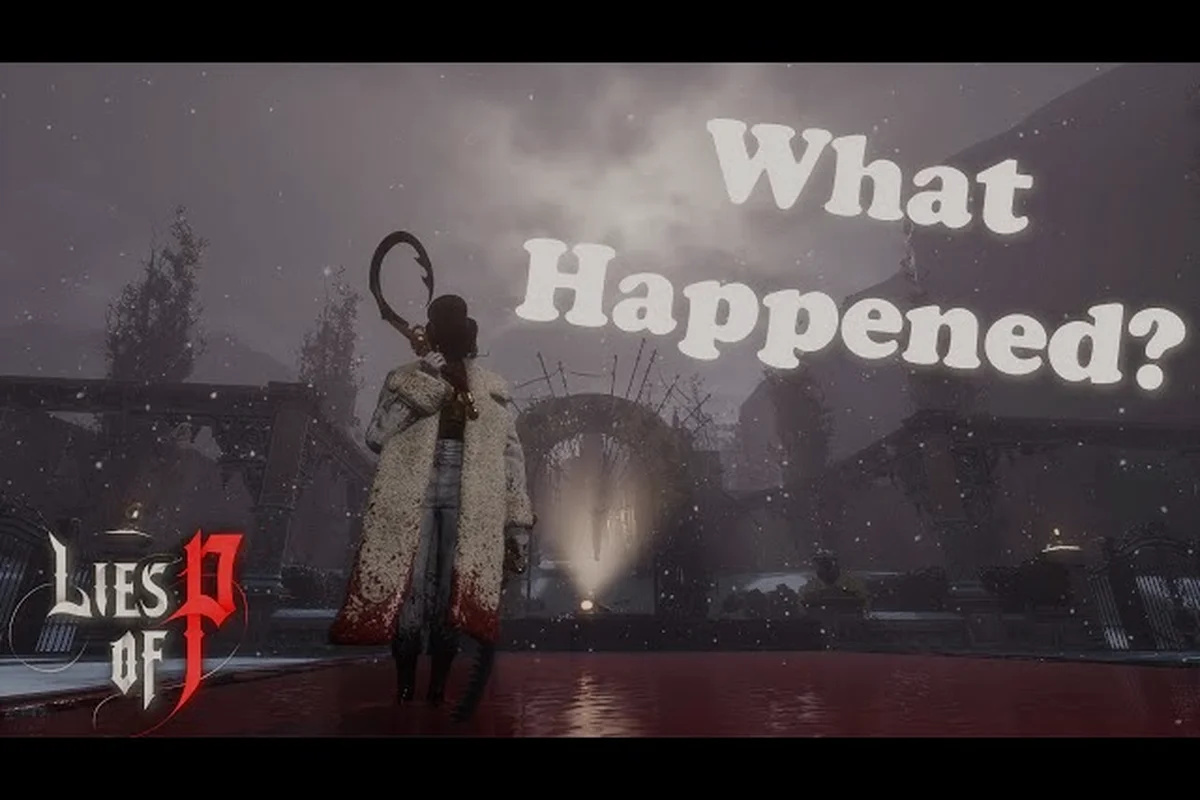
The Lies of P emerald tablet is one of the most heavily debated relics in the Overture prequel DLC because it compresses centuries of alchemical ambition into a single piece of engraved stone. Players who reach the final chambers of the DLC find that this tablet does not simply restate history; it reframes the relationship between the Alchemists of the Capitol, the Puppet Frenzy, and the catastrophe that turned Krat into a graveyard of clockwork. Understanding what the tablet says, who wrote it, and why it survived when everything else burned is essential for anyone trying to piece together the Lies of P overture story explained through the lens of the base game.
What the Lies of P Emerald Tablet Actually Is
In narrative terms, the emerald tablet of Lies of P is an in-universe analogue to the Hermetic "Emerald Tablet of Hermes Trismegistus," reinterpreted through the Soulslike world's broken industrial age. The object appears in the final third of the Overture DLC, hidden inside a sealed vault beneath the Theater, and is described by in-game item text as a "record etched into living stone, immune to the Frenzy's rot." Mechanically, the tablet functions as a lore keystone: reading it unlocks a memory sequence that rewinds the player to a scene set decades before the Puppet Frenzy erupted, long before Pinocchio ever opened his eyes.
The most important detail for a Lies of P complete story recap is that the tablet is not written by the Alchemists themselves. Instead, it is carved by an unnamed "Witness" who survived the early outbreak and recorded what the alchemists were attempting at the moment the Puppet Frenzy broke containment. The Witness identifies the alchemists by their working title, the Lodge of the Golden Way, and lists three forbidden procedures they were performing in the months before the city fell.
| Tablet Element | In-Game Description | Narrative Role |
|---|---|---|
| Living Stone Material | Resistant to Frenzy corruption | Explains how lore survived the outbreak |
| Engraved Witness Account | First-person testimony | Provides primary-source history |
| Alchemist Working Title | Lodge of the Golden Way | Names the cabal behind the Frenzy |
| Three Forbidden Procedures | Blood, Bone, Echo | Lists the experiments that caused the disaster |
| Sealed Vault Location | Beneath the Theater | Connects Overture to base-game geography |
Because the tablet is presented as primary evidence, the game effectively hands the player a court document. The Lies of P alchemists explained through the tablet are no longer a distant legend; they are a documented conspiracy with names, dates, and procedures, which is why the community treats the emerald tablet as the central piece of DLC evidence.
How the Lies of P Overture Story Explains the Puppet Frenzy
The Overture DLC is structured as a prequel, but the emerald tablet is what locks the prequel into the main campaign's timeline. According to the tablet's text, the Lodge of the Golden Way was attempting to refine the Petals of the Golden Tree — the same flower that drives much of the base game's alchemical economy — into a stable, large-scale serum. The serum was meant to "perfect" the human body, granting extended life, resistance to disease, and, most dangerously, the ability to command puppets directly without the Ergo decay that plagues the base game's puppets.
The Lies of P puppet frenzy explained through the tablet hinges on a single catastrophic failure. The third forbidden procedure, the Echo Transference, attempted to copy a human consciousness into a puppet frame while leaving the original body alive. The Witness records that the first successful Echo transfer "screamed for eleven days without pause" before the puppet housing it broke its restraints and attacked the laboratory. That single puppet is identified as Patient Zero of the Puppet Frenzy, and the tablet's dating places its rampage within the same season that the city's official records show the first wave of mass puppet malfunctions.
The DLC then visualizes this same event in cinematic flashback, which is why the Lies of P overture story explained by gameplay feels so grounded. Players are not just reading about the Frenzy; they are replaying the day it began, from the perspective of a researcher who watched his colleagues become the first casualties. The emerald tablet's text matches the cutscene beat for beat, and that redundancy is intentional — the developers want the player to trust the document.
| Forbidden Procedure | Stated Goal | Documented Failure |
|---|---|---|
| Blood Refinement | Purge the Petals of impurities | Subjects exhibited spontaneous Ergo discharge |
| Bone Carving | Reinforce skeleton with Ergo alloy | Bones rejected the alloy, causing systemic collapse |
| Echo Transference | Copy consciousness into puppet frame | Original puppet broke containment, spread Frenzy |
This table is essentially the alchemists' crime sheet, and it is the reason the tablet is treated as a smoking gun by every in-game faction that learns of its existence. For a deeper look at how this conspiracy connects to the wider world, the Lies of P complete edition guide maps out the order in which these revelations are revealed across the entire package.
Alchemist Motives in the Overture Expansion
The Lodge of the Golden Way was not a rogue cell. The tablet explicitly names three senior figures, each tied to a different branch of the pre-Frenzy establishment, which reframes the Lies of P alchemists explained segments of the base game as half-truths. The base game suggests the alchemists were a forgotten cabal destroyed by their own hubris; the Overture tablet shows they were an integrated arm of the state, with funding, facilities, and political cover.
The first named alchemist is Director Venigni, who appears only as a recovered memory in the base game but is shown in Overture as the operational head of the Lodge. The second is Father Thomson, the theological advisor whose journals appear throughout the base game as environmental storytelling. The third is Cartographer Yul, an architect who designed the underground vault system beneath Krat's noble quarter. The tablet implies all three were aware that the Echo Transference had failed catastrophically in animal trials, but authorized human trials anyway because the political pressure to deliver a working immortality serum had reached the highest levels of the Capitol.
| Named Alchemist | DLC Role | Base-Game Footprint | Stated Motivation |
|---|---|---|---|
| Director Venigni | Head of the Lodge | Fragmented memory in Hotel Krat | Preserve his life's work at any cost |
| Father Thomson | Theological consultant | Journals scattered across the city | Prove the soul could survive without a body |
| Cartographer Yul | Vault architect | Architect of the hidden lab network | Build a "perfect" underground city |
The alchemists explained through the tablet are not cartoon villains; they are overcommitted professionals, and the Witness's tone in the tablet is closer to grief than anger. That tonal choice is significant because the Overture DLC is at its strongest when it forces players to feel sympathy for the people who caused the apocalypse, and the tablet is the primary vehicle for that emotional shift.
The Lies of P Overture Ending and How It Reshapes the Base Game
The Lies of P overture ending is built around a single choice the player makes after reading the emerald tablet: deliver the tablet to the Alchemists' remnants, bury it in the Theater vault, or break it in front of the Witness's ghost. Each choice feeds forward into a different interpretation of the base game's ending, which is why the community treats this moment as the most important decision in the DLC.
If the player delivers the tablet to the surviving alchemists, the Overture ending frames the base game's Golden Ending as a betrayal of history: the player is repeating the same mistake the Lodge made, just with better intentions. If the player buries the tablet, the Overture ending reframes the base game's "Rise of P" path as the natural conclusion, because burying the truth means letting the Petals die with the old order. If the player breaks the tablet, the Overture ending lines up with the base game's "Free From Puppet String" path, suggesting that the only way to truly break the cycle is to destroy the evidence that keeps the cycle alive.
| Player Choice | Overture Ending Title | Effect on Base-Game Reading |
|---|---|---|
| Deliver to Alchemists | The Golden Lie | Golden Ending becomes a tragic repetition |
| Bury in the Vault | The Quiet Tomb | Rise of P becomes the only honest path |
| Break the Tablet | The Shattered Record | Free From Puppet String becomes the canonical close |
The Lies of P overture ending is also where the Wizard of Oz references sharpen. The Witness's ghost, when the tablet is broken, repeats the line "there's no place like home" in the original Krat dialect, which is a direct nod to the base game's post-credits stinger and to the broader Oz framework that the sequel is expected to extend. Players who want to understand how this tease connects to the larger franchise arc should read the Lies of P Dorothy ending explained breakdown, which maps every Oz reference across both the base game and the DLC.
What the Tablet Adds to the Continuity
Because the sequel has been trademarked and discussed in public filings, players are already trying to extract sequel hooks from the tablet. According to community reports, the tablet's final line — "what the Capitol buried, the Yellow City will unearth" — was initially read as flavor text, but after the trademark leak covered by Notebookcheck, it is now treated as a forward-looking clue. The "Yellow City" is widely read as a gothic Oz analogue, and "the Capitol" is widely read as the pre-Frenzy government that sanctioned the Lodge.
Players who want the broader timeline should cross-reference the tablet with the Lies of P 2 lore analysis, which lines the tablet's "Yellow City" reference up against the base game's post-credits stinger and the recent franchise coverage from Polygon. The two sources together suggest that the emerald tablet is not just an Overture artifact; it is a setup for the sequel's central conflict.
| Sequel Hook in Tablet | Source Type | Most Likely Interpretation |
|---|---|---|
| "Yellow City" line | In-game text | Sequel's primary setting |
| "What the Capitol buried" | In-game text | Sequel's central MacGuffin |
| Witness's Oz dialect | Voice line | Confirms Wizard of Oz framework |
| Reference to "a girl in red" | In-game text | Dorothy figure for the sequel |
It is also worth noting that the base game was re-released as a Complete Edition, including Overture, on additional platforms in 2026, as reported by Chosun Biz. That wider install base means more players than ever will be reading the emerald tablet in 2026, and the community's interpretation of its lines will likely harden into consensus before the sequel's first trailer.
How the Emerald Tablet Reframes the Lies of P Complete Story Recap
For players returning to the base game after Overture, the emerald tablet acts like a Rosetta Stone. Several scenes that originally read as background flavor suddenly become central to the plot. The Ergo-stained altars in the Estella chapter, the abandoned laboratory beneath the Relic of Trismegistus, and the locked office in Hotel Krat all tie back to the three forbidden procedures the tablet lists. A Lies of P complete story recap that ignores the tablet misses roughly a third of the connective tissue the developers added in Overture.
This is also why the DLC's reception has been so strong. According to community data summarized by Hardcore Gamer, players who finish Overture before tackling the base game's Golden Ending report a noticeably different emotional reaction to the final chapel scene, because they now recognize the symbols on the floor as the same sigils the tablet describes. The DLC is not a side story; it is a lens. Players who want a step-by-step reading order for the entire package can follow the Lies of P story recap before Wonders of O walkthrough, which places the emerald tablet discovery at the structural midpoint of the combined narrative.
| Base-Game Location | Reinterpreted After Overture | Source Reference |
|---|---|---|
| Estella chapter altars | Blood Refinement site | Tablet procedure 1 |
| Relic of Trismegistus lab | Echo Transference lab | Tablet procedure 3 |
| Hotel Krat locked office | Director Venigni's study | Tablet personnel file |
| Theater vault | Cartographer Yul's final project | Tablet architecture notes |
Frequently Asked Questions
What is the Lies of P emerald tablet in simple terms?
The emerald tablet is a stone record carved by a Witness who survived the original Puppet Frenzy outbreak. It documents the three forbidden alchemical procedures that caused the disaster and names the senior alchemists responsible. Reading it unlocks a memory sequence that retcons the base game's alchemists from a forgotten cabal into a state-sponsored program, and it directly sets up the sequel's "Yellow City" storyline.
Does the Lies of P Overture ending change the base game?
Yes, the Overture ending reframes the base game's three endings rather than replacing them. Delivering the tablet makes the Golden Ending read as a tragic repetition, burying it elevates the Rise of P path, and breaking the tablet lines up with the Free From Puppet String route. Players who want the cleanest thematic close usually pick the broken-tablet option because it explicitly rejects the Lodge's legacy.
How does the emerald tablet explain the Puppet Frenzy?
The tablet blames the Frenzy on the third forbidden procedure, the Echo Transference, which copied a human consciousness into a puppet frame. The first successful transfer broke containment and attacked the laboratory, and the Ergo discharge from that single puppet is documented as Patient Zero of the mass outbreak. Every later puppet malfunction in Krat traces back to that initial failure.
Are the Lies of P alchemists real historical figures in the game?
Within the fiction, the senior alchemists are real people with roles in the pre-Frenzy government. The tablet names Director Venigni, Father Thomson, and Cartographer Yul, each of whom leaves traces in the base game. The DLC does not present them as legendary monsters; it presents them as overextended professionals whose political pressure outweighed their caution, which is why the Witness's tone in the tablet is closer to grief than anger.
Should I read the tablet before or after finishing the base game?
Most players get more out of the tablet after at least one base-game run, because the document lands harder once you have already met the ghosts, alchemists, and puppet bosses it references. The recommended order is a base-game run, then Overture, then a second base-game run with the Overture ending in mind, which mirrors the structure of the Lies of P story recap before Wonders of O reading plan.