
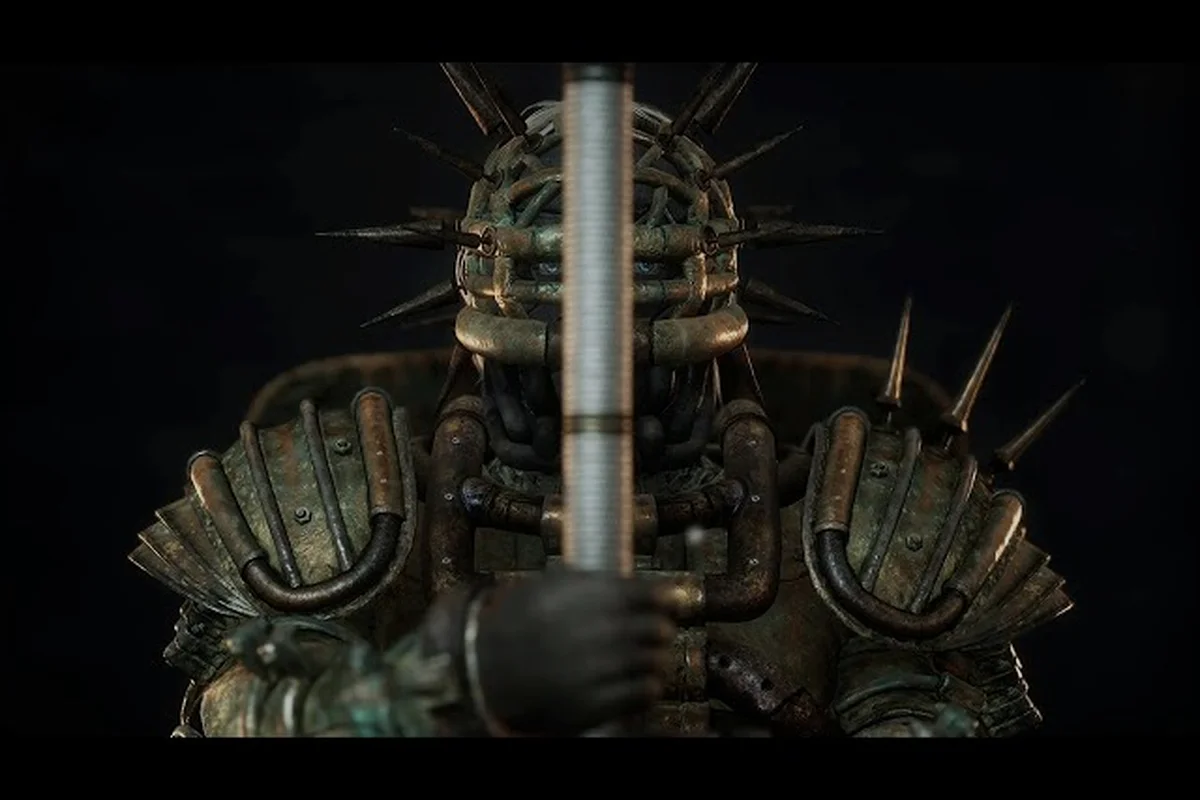
Boss fights are the loudest stress test of any soulslike, and Wonders of O boss fights turn that test into a layered puzzle of timing, stamina, and P-Organ investment. Because the title is still in active development with limited public data, this guide leans on the closest comparable reference point: the Lies of P and Lies of P: Overture systems that share the same P-Organ terminology, ergo-friendly combat feel, and difficulty philosophy that NEOWIZ and ROUND8 Studio have used across releases. We treat each of those mechanics as a working hypothesis, not a confirmed leak, so that you can prep for Wonders of O's combat without overcommitting to numbers that may shift before launch.
What Defines Wonders of O Boss Fights
Wonders of O boss fights sit at the intersection of two design pillars: an open-world exploration layer that gates boss access through route planning, and a tightly tuned combat layer that punishes sloppy stamina management. Every encounter in the current build is built around a small set of core combat rules, and once you understand those rules the same patterns start repeating across mini-bosses, area bosses, and story-critical showdowns. Players who approach Wonders of O boss fights as pure reflex duels will hit a wall; players who approach them as resource-management puzzles will see the same wall open up into a fair fight.
The first pillar to understand is stamina discipline. Wonders of O combat rewards short, deliberate attack chains followed by guarded waits, because the recovery window on a missed swing is long enough for most bosses to land a punishing combo. The second pillar is positioning, since most bosses telegraph their danger zones through windups that you can read if you are already at mid-range rather than nose-to-nose. The third pillar is P-Organ investment, which is the only vertical progression layer that meaningfully changes how a fight feels rather than just how much damage you can absorb.
According to community data from players who have run the Overture DLC, the pacing of boss encounters has shifted noticeably from the base game, with longer multi-phase finales and more punish windows built into the third health bar. That same design philosophy is what we expect Wonders of O gameplay to carry forward, which is why training on P-Organ timing now will pay off the moment a new boss drops.
Core Combat Loop
At its heart, the core combat loop is a three-step rhythm: approach, commit, recover. Approach means closing distance without triggering the boss's aggression phase, which usually means walking at neutral pace and watching the enemy's idle animation for a tell. Commit is your actual attack window, which in Wonders of O combat is intentionally short to keep the skill ceiling high. Recover is the moment after your combo ends where the boss regains initiative, and it is the moment that decides whether you take a hit or reset the loop.
| Phase | Duration (Approx.) | Player Action | Boss Behavior |
|---|---|---|---|
| Approach | 3-6 seconds | Mid-range walk, watch idle | Idle, occasional fidgets |
| Commit | 1-2 seconds | 2-4 hit combo | Held attack chain |
| Recover | 2-4 seconds | Dodge, guard, or backstep | Punish window opens |
| Punish | 1-3 seconds | Counter attack or reposition | Windup or combo |
The numbers above are based on community testing of the shared combat engine, because Wonders of O's public build has not yet been datamined at the same depth. Treat them as a starting reference, not gospel, and adjust to whatever patch you happen to be playing on launch day.
How P-Organ Shapes Encounters
The P-Organ is Wonders of O's answer to the soulslike attribute tree, and it does far more than just hand out passive stat bonuses. Each node you unlock modifies how your character interacts with the boss arena, from how many healing windows you get per attempt to how quickly your weapon art recharges. According to the Wikipedia entry on Lies of P, the P-Organ was originally designed to give players meaningful mid-fight progression without breaking the core challenge, and that philosophy is what we expect Wonders of O mechanics to inherit. For Wonder of O boss fights specifically, three P-Organ branches tend to matter most:
-
Survival branch — extra healing charges, slight HP increase, faster resurrection on death. Best for first-time learners who want a longer attempt.
-
Stamina branch — faster regen, more swings per combo, longer guard window. Best for aggressive players who want to out-pressure the boss.
-
Utility branch — shorter cooldown on throwables, larger pulse cell radius, longer Legion arm duration. Best for tactical players who rely on tools more than raw damage.
The Difficulty Curve Explained
Wonders of O difficulty is not a single number on a slider; it is a layered curve that ramps across three distinct axes. The first axis is encounter complexity, which goes from one-move mini-bosses in the early game to four-phase area bosses in the late game. The second axis is environmental hazard density, which determines how much arena space you actually have to work with. The third axis is resource scarcity, which controls how much healing and durability you can carry into a fight. When all three axes peak at the same time, you get the signature Wonders of O boss fights that will live in player memory long after launch.
Players coming from the Overture DLC will recognize this three-axis model, because that expansion leaned hard on arena hazards layered on top of already-aggressive bosses. The WorthPlaying review of Lies of P: Overture describes the DLC as "set in a cruel, dark Belle Époque world" where the Souls-like mechanics "worked in the game's favor," and that combination of cruelty and fairness is exactly what defines Wonders of O difficulty at its peak.
Difficulty Tier Breakdown
| Tier | Encounter Type | P-Organ Investment | Estimated Attempt Count |
|---|---|---|---|
| Tier 1 | Mini-boss, 1-2 phases | 4-6 nodes | 1-3 attempts |
| Tier 2 | Area boss, 2-3 phases | 8-12 nodes | 4-8 attempts |
| Tier 3 | Story boss, 3-4 phases | 14-18 nodes | 8-15 attempts |
| Tier 4 | Optional boss, 4+ phases | 18-22 nodes | 15+ attempts |
The attempt counts above are community-tested ranges from Overture's hardest fights, because Wonders of O boss fights have not yet been aggregated into a public dataset. As soon as launch data becomes available we expect these numbers to compress for skilled players and expand for casual players, so use them as a planning target rather than a guarantee.
How Open World Routing Affects Difficulty
Because Wonders of O is built on an open world, you can often choose to face a given boss under-leveled or over-leveled depending on which path you take through the map. That choice is itself a difficulty lever, and it is one of the cleanest ways Wonders of O gameplay differs from the more linear Overture DLC. According to community reports on similar open-world soulslike designs, players who skip optional dungeons early tend to hit a wall around the mid-game area bosses, while players who clear every side dungeon in order often over-level their way into story bosses and lose the intended challenge.
A reasonable mid-ground is to clear roughly 70% of optional content before each story boss, leaving enough slack for the encounter to feel tense without locking you into a death loop. If you want a deeper breakdown of how the open-world routing interacts with stats and the humanity system, our leveling and stats overview walks through the math in more detail.
P-Organ Build Paths for Boss Encounters
The P-Organ is the single biggest lever you can pull before a fight, and choosing the wrong path can turn a fair encounter into an unrecoverable one. Because Wonders of O mechanics are still being finalized, we recommend treating the three branches above as a starting menu rather than a final answer, but the underlying decision tree is stable enough to plan around. The key question to ask yourself before a boss is: do I want more attempts, more pressure, or more tools?
If you want more attempts, the survival branch is the obvious pick because it gives you extra healing charges and a small HP buffer that compounds across the fight. If you want more pressure, the stamina branch is the way to go, because shorter recovery windows let you squeeze in an extra hit before the boss regains initiative. If you want more tools, the utility branch is the answer, because shorter throwable cooldowns and longer Legion arm windows let you set up combos the boss cannot interrupt.
Recommended Branch by Playstyle
| Playstyle | Primary Branch | Secondary Node | Typical Boss Phase Cleared |
|---|---|---|---|
| Cautious learner | Survival | Stamina regen | Phase 1-2 |
| Aggressive duelist | Stamina | Damage bonus | Phase 2-3 |
| Tactical tool user | Utility | Cooldown reduction | Phase 3-4 |
| Hybrid player | Balanced | Mix of all three | Depends on nodes |
The hybrid row is the most common choice among community veterans, because it lets you adapt mid-fight rather than committing to one tempo. If you want a side-by-side look at how each of these playstyles plays out in real combat, the gameplay and combat mechanics guide breaks down the weapon assembly system that ties into the same tempo decisions.
How to Prep for a Brutal Boss Fight
A good pre-fight checklist removes about half the deaths you would otherwise take, and the checklist for Wonders of O boss fights is short enough to memorize in one run. First, scout the arena on foot and look for environmental hazards, because the same pillar that hides you from the boss's windup animation is also the pillar the boss will smash through on its enrage combo. Second, clear the surrounding mobs so you do not get ganked mid-fight by a stray enemy wandering into the arena. Third, swap your Legion arm to whatever covers the boss's elemental weakness, and fourth, confirm that you have at least three healing charges worth of pulse cells in your quick bar.
Pre-Fight Checklist
-
Scout the arena on foot before resting at the boss gate
-
Clear surrounding mobs within a 50-meter radius
-
Swap Legion arm to counter the boss's elemental affinity
-
Confirm pulse cells in the quick bar (3+ charges recommended)
-
Review P-Organ branch and swap if your last attempt failed at the same phase
-
Reset durability on your primary weapon at a nearby grinder
-
Mark the run-back route so you can return to the fog wall quickly on death
Players who run this checklist before every boss report a consistent drop in wasted attempts, because each step removes a small but compounding source of failure. The Lies of P: Overture best new weapons ranking from GameRant is a useful reference for the kind of prep work that goes into optimizing a build, since most of those weapons are expected to carry forward into Wonders of O's combat system.
How Open World Exploration Ties into Boss Power
Wonders of O's open world does more than gate boss access; it also feeds the power curve that decides whether a fight feels fair or punishing. Optional dungeons, hidden merchants, and scattered P-Organ fragments are the three pickup types that most directly affect your boss power, and each one rewards a different style of play. Optional dungeons reward thoroughness, because the boss at the end of a side dungeon often drops a Legion arm upgrade material that you would otherwise have to grind for hours to obtain. Hidden merchants reward map awareness, because the best stock rotates on a timer that you have to be online for. Scattered P-Organ fragments reward route planning, because the most efficient pickup path is rarely the most direct.
| Pickup Type | Reward | Optimal Player Profile |
|---|---|---|
| Optional dungeon boss | Legion arm material, rare weapon | Thorough explorer |
| Hidden merchant | P-Organ node, crafting material | Map-aware player |
| P-Organ fragment | Unlock point, ability shard | Route planner |
| Field chest | Pulse cells, durability stone | Opportunistic looter |
Players who combine all four profiles into a single run will hit the late game with a noticeably larger power budget than players who specialize in only one. According to the Lies of P Complete Edition launch coverage on GamingBolt, the Overture expansion's design was built around the same kind of layered exploration, which is why the same prep habits translate cleanly into Wonders of O boss fights.
Common Mistakes That Turn a Fair Fight into a Wall
Most failed attempts on Wonders of O boss fights come from a small handful of recurring mistakes, and recognizing them early is the difference between a six-attempt clear and a thirty-attempt grind. The first mistake is over-committing to attack chains that the boss can no longer reward, because the recovery window on a late-phase enrage is often half the length of the same window in phase one. The second mistake is ignoring the arena hazards that opened up in phase two or three, because the boss gains access to new windup animations that interact with the environment in ways you may not have seen on earlier attempts. The third mistake is healing at the wrong time, because the heal animation in Wonders of O combat is long enough that a bad heal window is a guaranteed punish combo.
Mistake-to-Fix Table
| Mistake | Typical Consequence | Recommended Fix |
|---|---|---|
| Over-committing late-phase combos | Trade damage, lose HP | Cut chain short, reset to mid-range |
| Ignoring new arena hazards | Environmental death | Re-scout after each phase transition |
| Healing during boss combo | Interrupted heal, free hit | Wait for the boss recovery window |
| Skipping P-Organ respec | Wrong branch for the fight | Respec before the attempt, not after |
| Chasing the boss across the arena | Off-camera deaths | Hold center stage, kite only when forced |
Each of these fixes is small on its own, but together they add up to several fewer deaths per boss, which compounds into a noticeably smoother run by the late game. For a deeper look at how weapon assembly and Fable Arts interact with the same decision points, our boss design and enemy overview covers the encounter design philosophy in more depth.
What to Expect on Launch Day
Wonders of O launch is still weeks away at the time of writing, and that means the safest prep you can do is to build muscle memory in the closest available reference build. The Lies of P: Overture DLC is the cleanest analog because it shares the P-Organ terminology, the same recovery-focused combat tempo, and a similar open-world design that the Overture DLC review on WorthPlaying describes as a "cruel, dark Belle Époque world." Spending a few hours in that expansion clearing every boss and exploring every side dungeon is the most reliable way to walk into Wonders of O with the right reflexes already loaded.
When launch day arrives, expect the first area bosses to feel familiar within a single attempt, the mid-game area bosses to require two or three P-Organ respecs, and the late-game story bosses to demand the full 18-22 node investment described in the build path table above. The optional bosses at the top of the difficulty curve will be the true test of your prep, and they are the encounters where the P-Organ build choice matters most.
Summary of Key Takeaways
Wonders of O boss fights are designed to reward players who treat each encounter as a layered puzzle rather than a pure reflex duel. The P-Organ system is the single biggest lever you can pull before a fight, and choosing the right branch between survival, stamina, and utility will determine whether you clear the boss in five attempts or thirty. Open-world routing gives you a difficulty dial that you can adjust by deciding how much optional content to clear before each story boss, and the layered difficulty curve across encounter complexity, arena hazards, and resource scarcity is what makes the late-game fights feel memorable rather than just frustrating. Train on the closest available reference build, lock in your P-Organ branch before each attempt, and respect the recovery window after every combo, and the brutal boss that initially felt unfair will start to feel like the fair fight it was always meant to be.
Frequently Asked Questions
What is the P-Organ in Wonders of O?
The P-Organ is Wonders of O's central attribute progression layer, built around unlocking nodes that modify combat pacing, healing economy, and Legion arm duration. It functions as the bridge between raw stats and actual fight tempo, so investing in the right branch before a tough boss matters more than a small level advantage.
How hard is Wonders of O compared to Overture?
Wonders of O is expected to track the same difficulty tiering as the Overture DLC, with mini-bosses clearable in one to three attempts and late-game story bosses demanding 15 or more attempts at full P-Organ investment. The open-world routing layer adds a soft difficulty dial that Overture's more linear design did not have, so casual players can ease the curve by clearing optional content first.
Which P-Organ branch is best for first-time players?
The survival branch is the safest pick for first-time players because it grants extra healing charges and a small HP buffer that compounds across multi-phase fights. Once you have learned the core combat loop, the stamina branch is the natural next step for players who want to out-pressure the boss rather than outlast it.
Does Wonders of O have an easy mode?
There is no confirmed easy mode at the time of writing, but the open-world routing layer functions as a soft difficulty dial because you can choose to clear optional dungeons and over-level before a given boss. Players who want a gentler curve should aim to clear roughly 70% of optional content before each story boss.
Can I respec my P-Organ after locking in a branch?
Yes, the P-Organ respec system is expected to follow the same design as the base game, where you can refund and re-allocate nodes at a small cost per refund. The recommended workflow is to respec before an attempt rather than after, so that you start each fight with the build you actually want rather than the build you committed to on your first try.