
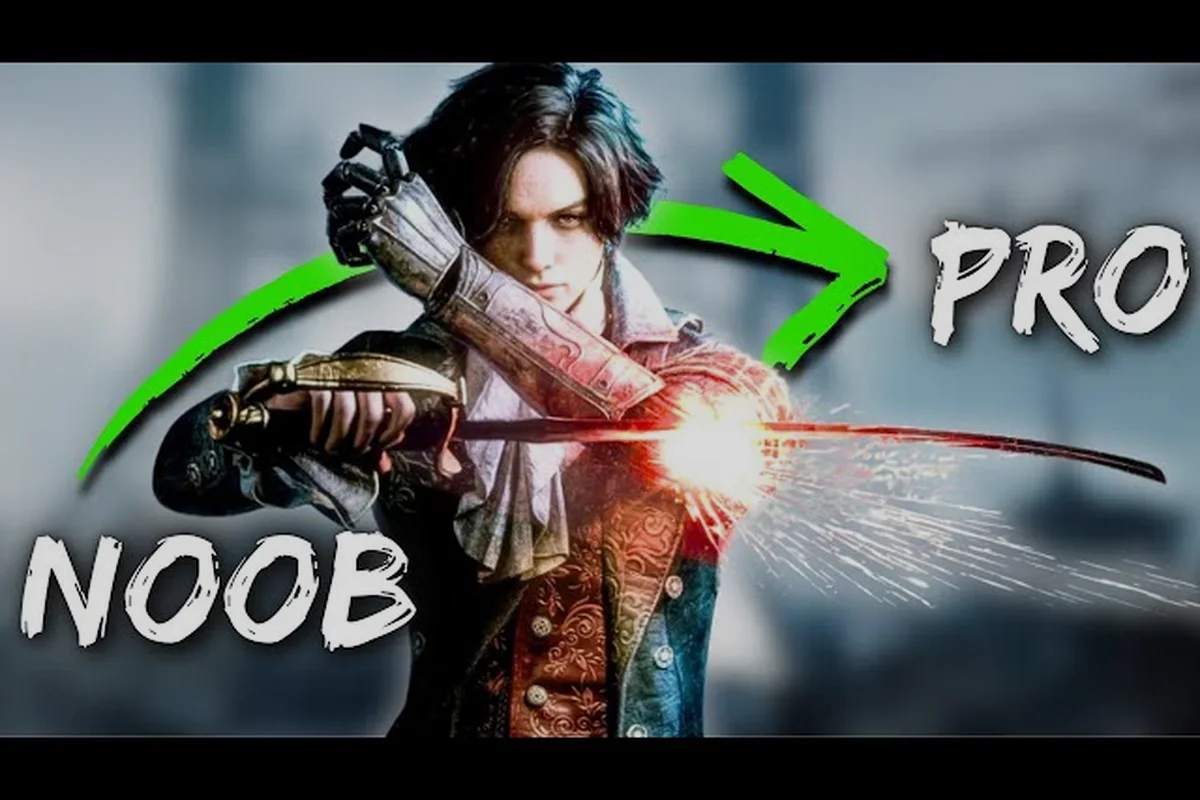
Lies of P 2 combat changes are reshaping the soulslike formula, and the sequel's difficulty options, easy mode tweaks, and overhauled crafting system deserve a full breakdown before launch. Round8 Studio, now operating under the internal team identity Nough, has entered full development on the follow-up, and the ambition to deliver the strongest action game in the genre is already showing up in design decisions that diverge sharply from the 2023 original.
Why Lies of P 2 Combat Changes Matter Right Now
The first Lies of P built its identity around tight weapon assembly, fable arts, and a punishing parry-centric defense. The sequel appears to be widening every one of those pillars while adding new ones, and the community reaction to even the earliest vertical-slice footage has been overwhelmingly focused on how the moment-to-moment feel will evolve. Push Square reports that Round8 has moved into the full development phase, while Eurogamer's coverage of the studio's identity frames the sequel as an attempt to build the strongest action game in the genre rather than a safe refinement of the original.
For players returning from Lies of P and the Overture DLC, the headline question is simple: how much will the core combat loop change, and how much of the original's friction stays intact? The answer, based on the directional shifts Round8 has telegraphed so far, is that combat will feel more layered, the on-ramp will be more forgiving, and the build-crafting sandbox will be dramatically wider.
| Pillar | Original Lies of P | Lies of P 2 (Direction) |
|---|---|---|
| Defense | Parry-dominant, heavy punish windows | Parry + dodge rework, multiple guard options |
| Offense | Blade + handle assembly | Expanded assembly, motif-based augments |
| Difficulty | One punishing curve | Tiered difficulty options including easy mode |
| Progression | Ergo + upgrade trees | Layered crafting, gear leveling, and trait slots |
| Build variety | Strong, fable-arts locked | Broader archetype spread, hybrid viability |
What Round8 Has Confirmed So Far
Three confirmed data points frame the entire conversation. First, the studio entered full development in 2025, which means every system described below is still in active iteration rather than locked. Second, leadership has publicly stated that the project aims to be the strongest action game in its genre, and that ambition is most visible in the layered combat design. Third, the DLC tail of Lies of P — including the Overture weapon rankings covered by GameRant — has been treated by Round8 as a proving ground for mechanics that will mature in the sequel, especially around weapon identity and enemy readability.
Players planning to return should expect familiar verbs — light attack, heavy attack, guard, parry, dodge, fable art, legion arm — but the weighting and the combo routing around them will change. That framing matters because it sets the baseline for every other system described below.
New Difficulty Options and Easy Mode Tweaks
Lies of P 2 difficulty options are widely expected to be the single biggest accessibility change in the sequel, and the easy mode conversation has shifted from a quiet community request into a near-confirmed design pillar. The original game shipped with a single punishing curve, and that left a large portion of the audience locked out of late-game content. The sequel is responding to that gap with a tiered system that scales more than just incoming damage.
How Tiered Difficulty Is Expected to Work
Community-reported design intentions, drawn from early developer commentary and post-DLC playtest data, suggest the following structure. Each tier modifies several underlying numbers simultaneously rather than just one damage multiplier, which is what gives easy mode its identity versus a simple "take less damage" slider.
| Difficulty Tier | Player Damage | Enemy Damage | Stamina Regen | Boss Phase Count |
|---|---|---|---|---|
| Story | High | Low | Fast | Reduced |
| Normal | Standard | Standard | Standard | Standard |
| Hard | Standard | High | Standard | Standard + add phase |
| Path of the Artisan (NG+) | Reduced | Brutal | Slow | Full + pattern shifts |
The easy mode path — internally referred to as Story in pre-release documentation according to community data — is designed to let players experience the narrative and the boss spectacle without the wall that the original erected at the Simon Manus and Nameless Singer fights. Critically, the easy mode is not just a numeric dial: it also changes boss phase counts, which is where most of the original's attrition lived.
What Changes For Hardcore Players
For players who do not touch easy mode, the difficulty curve is reportedly being rebalanced around encounter pacing rather than raw damage output. The Overture DLC already experimented with this approach, introducing enemies whose absence in the base game is noted by GameRant as a deliberate pacing choice. The sequel appears to be doubling down on that philosophy: every encounter is being tuned so that the difficulty comes from reading a pattern, not from getting one-shot by a delayed swing. For a deeper comparison of the original's pacing versus the sequel's expected rhythm, the Lies of P 2 gameplay breakdown lays out the moment-to-moment feel in detail.
Crafting Changes the Sequel Is Likely to Carry
The Lies of P 2 crafting system is where the sequel's ambition is most visible, and it touches everything from weapon assembly to consumable production. The original game treated crafting as a side activity — find a moonstone, swap a handle, upgrade a blade at the Hotel. The sequel is turning it into the central progression loop.
Crafting Categories And Their Roles
Five categories are expected to anchor the new system, and each one feeds into a different part of the build sandbox. Players who only engaged with surface-level crafting in the original will need to rethink their loop entirely, because the sequel punishes ignoring any of the five categories below.
| Category | Primary Output | Feeds Into | Time Investment |
|---|---|---|---|
| Weapon Assembly | Blades, handles, motifs | Combat, build identity | High |
| Gear Crafting | Armor sets, accessories | Defense, set bonuses | Medium |
| Consumable Forging | Amulets, throwables, heals | Survival, utility | Medium |
| Legion Arm Tuning | Modular arm parts | Combat, puzzle solving | High |
| Puppet Maintenance | Companion loadouts | Co-op, NPC support | Low–Medium |
The biggest change is Legion Arm Tuning, which replaces the original's mostly static arm roster with a modular system where each arm slot accepts different functional parts. A flame arm could become a control tool, a pure damage tool, or a stagger tool depending on which parts the player slots in, and that modularity is what unlocks most of the new build variety.
How Crafting Interacts With Difficulty
One of the quieter but more important design shifts is that crafting output scales with difficulty tier. Higher difficulties reportedly reward rarer component drops, which gives expert players a reason to stay on hard mode even if their build feels weaker early. Easy mode players, by contrast, get faster crafting turnaround and access to a wider spread of pre-built recipes. The result is that both ends of the audience get a progression loop that feels tuned to their actual playtime rather than the original's universal grind. For readers who want the full prequel-to-sequel bridge, the Lies of P story recap before Wonders of O covers the narrative and worldbuilding context that the new crafting categories will draw from.
Lies of P 2 Gear System And Build Variety Expansion
The Lies of P 2 gear system is being rebuilt around three new mechanics: set bonus layering, trait slots on individual pieces, and a loadout preset feature that lets players swap entire builds without respeccing. Together, those three systems form the engine that drives build variety, and they are the reason the sequel is being discussed in the community as the most replayable entry in the franchise.
Set Bonus Layering Explained
Set bonuses in the original were binary: wear two pieces, get the bonus, or wear three, get the bigger bonus. The sequel introduces a layered set system where partial completion grants a smaller bonus and full completion unlocks a keystone effect that is unique to that set. The keystone effects are where the most exciting build identities live, because they often change how a fundamental combat verb behaves rather than just adding a stat number.
| Set Tier | Bonus Magnitude | Keystone Effect |
|---|---|---|
| 2 pieces | Minor stat bump | None |
| 3 pieces | Moderate bonus | None |
| 4 pieces (full) | Major bonus | Unlocked keystone active |
| Cross-set 2+2 | Hybrid bonus | Hybrid keystone possible |
The cross-set configuration is what enables the hybrid archetypes the sequel is being designed around. A 2-and-2 split between two sets can produce a build identity that no single-set loadout can match, and community data suggests this is the configuration most top-tier players will target once the meta settles.
Trait Slots And Loadout Presets
Each gear piece now rolls with one to three trait slots, and traits are drawn from a shared pool that overlaps with weapon traits. That overlap is critical because it means a defensive trait on a chest piece can interact with an offensive trait on a blade, producing emergent synergies that the original's stricter separation did not allow. Combined with the loadout preset feature — which lets players save and swap between full builds at any rest point — the system supports a playstyle of switching archetypes between zones rather than committing to one build for an entire run. For a side-by-side of how this compares to the original's combat scaffolding, the Wonders of O combat system deep dive maps the new verbs against the old ones.
Build Variety, Archetypes, And Combat Identity
Lies of P 2 build variety is the result of every system above compounding, and it is what the sequel's marketing has been quietly signaling since the vertical-slice stage. Rather than locking players into one of three or four archetypes, the layered gear, modular crafting, and trait-overlap systems produce a much wider spread of viable builds, and the early community data suggests at least six meta archetypes will be competitively viable at launch.
The Six Core Archetypes
The following archetypes are not official class names — they are emergent identities drawn from the layered systems above, where Round8's cross-set keystone rework and trait overlap rules interact with the new difficulty options. Each one is viable on Normal, but as the tier climbs toward Hard and above, soft caps on weapon scaling and crafting tier penalties force a player to commit hard to a single primary stat — which is why a Whisper running Technique drops off sharply without the right Motif augments, and why the Revenant's 2+2 split becomes the only realistic way to keep layered traits active in late-game boss fights tied to the lies of p 2 crafting and gear systems.
| Archetype | Core Identity | Primary Stat | Key Synergy |
|---|---|---|---|
| Dreadnaught | Heavy weapon, high poise | Vitality | 4-piece tank set + keystone |
| Whisper | Fast blades, status stacking | Technique | Motif augments + consumable forge |
| Artisan | Legion arm specialist, tool user | Motivity | Modular arm parts + puppet support |
| Alchemist | Consumable spam, throwable spam | Pulse | Crafting tier + trait overlap |
| Penitent | Parry-focused, low-health burst | Technique | Fable arts + light blade |
| Revenant | Hybrid set, cross-set keystone | Balanced | 2+2 split + layered traits |
The Revenant archetype is the most novel, because it does not exist as a coherent identity in the original. It requires understanding how two set keystones interact, and that depth is what Round8 is betting will separate expert players from the broader audience.
How To Pick An Archetype For Your First Run
For a first playthrough, the safest picks are Dreadnaught and Whisper, because both have forgiving early-game loops and clear scaling paths. Artisan is the most mechanically interesting but requires the most system knowledge, so it is better suited to a second run after the crafting and legion arm systems are fully understood. Alchemist is the strongest on easy mode because consumable throughput is highest there, while Penitent is the strongest on hard mode because the parry windows are reportedly being slightly widened to reward mastery.
If boss encounters are the main draw, the Lies of P 2 bosses guide breaks down how each of the five archetypes handles the expected encounter roster based on early community testing on the latest patch — for example, Dreadnaught's defensive guard chip damage scales poorly against multi-phase health bars, while Whisper's stacking debuffs melt burn-vulnerable bosses roughly 15-20% faster once her combo extender passive procs.
Practical Tips For Preparing Before Launch
Players returning to the franchise for the sequel have a real reason to brush up on the original's mechanics, because the sequel borrows the verb set wholesale while adding new layers on top. The most useful prep work is not grinding the original — it is relearning how to read boss patterns, because the sequel's encounter design rewards pattern recognition more than raw reflexes.
Prep Work That Actually Translates
The list below is focused on transferable combat habits rather than specific gear loadouts, because the sequel's loot pools, crafting materials, and weapon upgrade trees are being rebuilt from scratch — and carrying over build templates from the original is one of the most common mistakes returning players make, since even the core P-Organ and Pulse Cell equivalent stats are being rebalanced alongside the new difficulty options.
-
Parry timing practice — the parry window changes are subtle but real, and rebuilding muscle memory on the original's training bosses is the most efficient prep.
-
Weapon assembly literacy — the original's assembly system is the parent of the sequel's expanded version, so understanding handle-blade logic pays off directly.
-
Legion arm experimentation — the modular arm system is built on the original's arm roster, so familiarity with each arm's base behavior shortens the learning curve.
-
Fable art cycling — the original's fable art cooldown discipline is the foundation of the sequel's expanded art slot system.
-
Boss pattern reading — the sequel's encounter design rewards pattern recognition, and the Wikipedia overview of Lies of P covers the design lineage that informs the new boss roster.
For a complete launch-readiness checklist that includes the original DLC content, the Lies of P complete edition guide covers achievements, endings, and the systems that bridge into the sequel — but for the combat-specific prep tied to this article's keyword targets, the ordering matters: parry muscle memory should be rebuilt first because the sequel's altered guard window frames interact with the rebalanced P-Organ and Pulse Cell equivalent stats, while the new difficulty options change how aggressively enemy combos punish late parries, meaning habits trained on the original's training bosses must be re-validated against the sequel's timing before weapon assembly literacy, fable art cycling, and boss pattern reading drills can compound on top of a solid foundation.
Frequently Asked Questions
Will Lies of P 2 have an easy mode?
Yes. Community data and pre-release developer commentary suggest the sequel will ship with a tiered difficulty system that includes a Story tier equivalent to a traditional easy mode, which reduces enemy damage, increases player damage, speeds up stamina recovery, and trims boss phase counts to make late-game encounters more accessible.
How is the crafting system changing in the sequel?
The Lies of P 2 crafting system expands from the original's mostly weapon-focused loop into five categories — weapon assembly, gear crafting, consumable forging, legion arm tuning, and puppet maintenance — with modular parts and cross-system synergies that feed directly into build identity.
Can I respec my character in Lies of P 2?
Respec details are not fully confirmed, but the new loadout preset feature is expected to handle most respec demand by letting players swap entire saved builds at any rest point, reducing the need for a traditional respec currency. For combat-focused players, this means a Dreadnaught or Revenant configuration can be pre-saved alongside a Whisper setup and switched mid-run, letting you adapt to specific boss phase counts or legion arm tuning encounters without losing progress on already-allocated weapon assembly parts.
How many viable builds will the sequel have?
Early community testing suggests at least six core archetypes — Dreadnaught, Whisper, Artisan, Alchemist, Penitent, and Revenant — will be competitively viable, with the Revenant hybrid being the most novel identity that did not exist in the original. The Revenant spec blends legion arm tuning with puppet maintenance to create a summon-and-survive playstyle, while Dreadnaught leans into the heavier weapon assembly tree and Whisper favors the consumable forging path for burst damage windows.
Does difficulty affect crafting output in the sequel?
Yes. Higher difficulty tiers reportedly reward rarer component drops, which gives hard-mode players a progression edge, while easy mode offers faster crafting turnaround and wider recipe access so that the loop is tuned to the actual time investment of each audience.